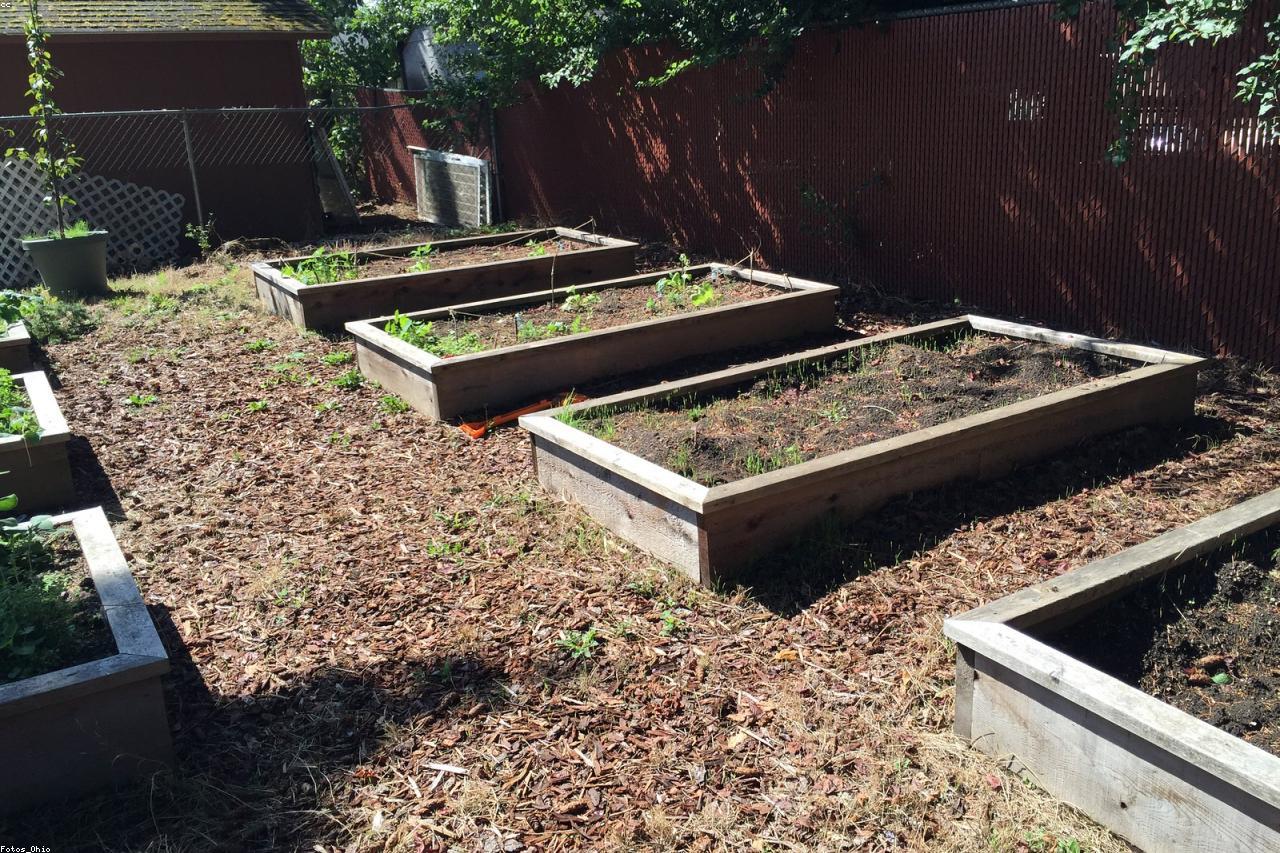
Most raised beds at garden centers are made from rough pine or low-grade cedar that rots in three or four seasons. The cheap kit beds are even worse, with corner joints that fail in the first winter and warped boards by year two. A genuinely durable raised bed costs slightly more upfront and lasts five times as long.
Our original raised beds were built from kit materials. Two are still standing seven years later because we rebuilt the corners and reinforced the panels. The newer beds we built ourselves from solid cedar are entering their fifth year with no signs of weakness. The construction techniques are not complicated; they just have to be done right.
Material choices that actually last
The wood you choose matters more than the design. Three material options work well for long-life raised beds.
- Cedar (western red or white). Naturally rot-resistant. Lasts 15-20 years with no treatment. Costs $4-$8 per board foot. The standard choice for a quality build.
- Redwood. Similar to cedar but slightly more expensive and slightly longer-lasting. Sustainability concerns about old-growth sourcing make this a less ethical choice in our view.
- Black locust or osage orange. Native rot-resistant hardwoods, 25-50 year lifespan. Hard to source but exceptional when available. Worth seeking out from local sawmills.
- Modern pressure-treated lumber (post-2003 ACQ treatment). Safe for vegetables, lasts 20+ years. Less premium aesthetic than cedar. About half the cost.
- Avoid: pine, fir, hemlock. Untreated softwood lasts 3-5 years in ground contact. False economy.
Sizing for a real garden
A bed should be reachable from both sides without stepping in. The classic 4-foot width works for most adults; reduce to 3 feet for shorter reach or for beds accessible from only one side. Length is flexible but 8-10 feet is comfortable for most yards.
Depth matters more than people think. A 6-inch bed limits you to shallow-rooted crops (lettuce, herbs, radishes). A 12-inch bed handles most vegetables comfortably. An 18-24 inch bed handles deep-rooted crops (carrots, parsnips, tomatoes) and gives perennials room to develop.
Our standard build is 4 feet wide, 8 feet long, 16 inches deep. This depth holds enough soil volume that watering is forgiving and the bed handles any vegetable we want to grow.
The build that holds up
For a 4-by-8 cedar bed at 16 inches deep, you need:
- Eight 2×6 boards, 8 feet long (the long sides, stacked two high on each side)
- Four 2×6 boards, 4 feet long (the short ends, stacked two high)
- Four 4×4 cedar posts, 18 inches long (corner posts)
- A box of 3-inch exterior-grade stainless steel or coated screws
- Optional: galvanized hardware cloth (1/4 inch mesh) for the bottom if rodents are a concern
Step by step assembly
Lay out the corner posts on a flat surface. Stack two 8-foot boards against each long-side pair of posts, top edges flush, and screw through the boards into the posts (three screws per board into each post). Repeat for the short ends.
You now have a rectangular frame 16 inches tall with posts at each corner. The posts extend down below the bottom of the boards by about 2-4 inches, which will anchor the bed into the ground.
Carry the assembled frame to the garden location. Level the site. Press the posts into the soil. The bed should sit firmly with no rocking. Add hardware cloth across the bottom now if you want rodent protection (staple to the bottom inside edges of the boards).
Fill with soil immediately or within a few days. A bed that sits empty through rain can shift; soil weight stabilizes everything.
Filling the bed correctly
The soil you put in determines the bed’s productivity for its first three years. Cheap fill soil performs poorly; buying real garden soil costs more but works.
For a 4x8x16 bed (about 32 cubic feet of soil needed), the standard recipe is roughly:
- One-third high-quality garden soil or screened topsoil
- One-third finished compost (preferably from multiple sources for diversity)
- One-third aged manure, leaf mold, or peat-free coconut coir for moisture retention
This works out to roughly 11 cubic feet of each component. Buy by the cubic yard from a local landscape supply if you have several beds (much cheaper than bagged). For a single bed, bagged garden soil and compost from a quality brand will work.
Avoid filling with cheap “topsoil” from big-box stores. Most is screened construction soil with minimal organic matter; plants struggle in it.
Maintenance over the long haul
A well-built cedar bed needs almost no annual maintenance for the first decade. Inspect once a year for:
Loose screws (tighten any that have backed out). Splitting boards (rare with quality cedar; replace individual boards if needed). Soil level (top up with compost every spring, typically 1-2 inches per year as soil compacts and organic matter decomposes).
By year 12-15, you may need to replace bottom boards if they have rotted at the soil contact line. The corner posts and upper boards typically remain solid. A modular construction (boards screwed into posts rather than glued or notched) makes replacements simple.
Avoid sealing or staining the wood. Sealants and stains break down within a few years and trap moisture against the wood, accelerating rot. Cedar weathers to a beautiful silver-grey over time; that aging is the wood’s natural protection.
A raised bed built from quality cedar with proper construction is one of the longest-lasting investments in a vegetable garden. The upfront cost is modest, the work is a weekend, and the result is a productive bed that will outlast cheap kit beds many times over. We have rebuilt corners and replaced individual boards but never had to rebuild a whole bed from scratch.
Related reading from the journal
For more along these lines, see Seasonal Planting Calendar for Cool-Climate Gardens, Succession Planting Without a Spreadsheet, and Sustainable Seed Saving for Home Gardeners.
Further reading
Trusted references we consulted while researching this piece. All external.