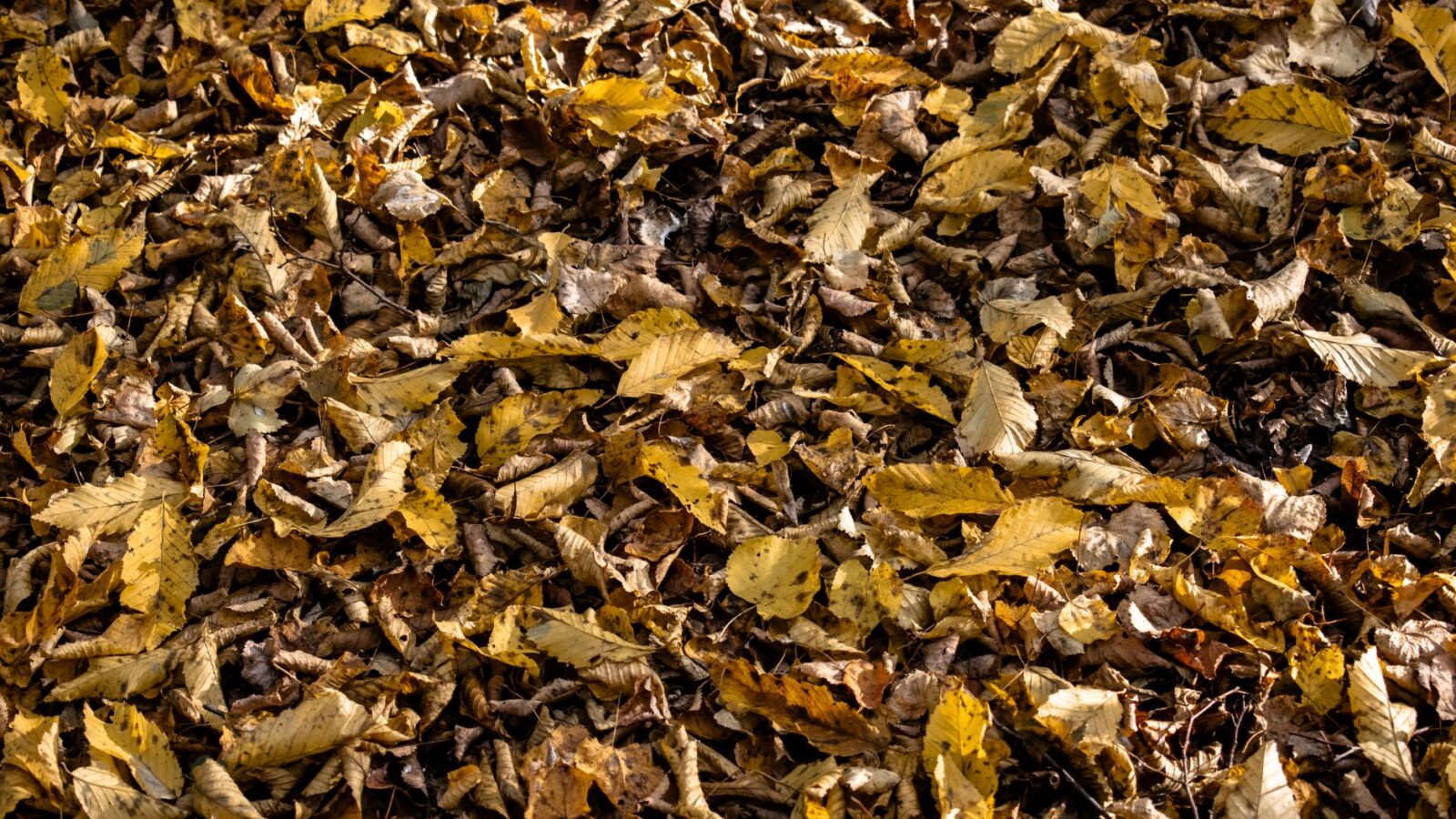
Every October my neighbors rake about 40 contractor bags of leaves to the curb, and every October I load as many as I can fit into my truck and drive them home. That pile becomes the best soil amendment I put on my market beds, and it costs me nothing but a Saturday morning and some gas. Leaf mould is not compost, it is not mulch in the ordinary sense, and it does something to soil structure that nothing I buy in a bag can match.
Most gardeners I know treat fallen leaves as a disposal problem. That is a real loss.
What leaf mould actually is
Leaf mould is the dark, crumbly, slightly sweet-smelling material you get when deciduous leaves sit and decompose slowly through the action of fungi, not bacteria. That single distinction is the whole point. A hot compost pile is a bacterial process: it hits 130-160 degrees F, breaks down protein-rich green material fast, and finishes in 8-12 weeks. A leaf pile stays cool, damp, and quiet, and the fungi that colonize it produce a completely different end product.
You end up with something closer to peat than to compost. It holds roughly 300 to 500 percent of its weight in water. It has almost no nutrients to speak of, maybe 0.5 percent nitrogen at the outside, which is why it is a conditioner, not a fertilizer. What it does is fix soil texture. Sandy soil holds moisture. Heavy clay, which is most of what I deal with on this ridge, opens up and starts to breathe.
Why fungal decomposition matters
Vegetable garden soil is usually bacteria-dominant because we work it hard, add compost, and grow annuals. Forest soil, and the soil under perennials and fruit trees, wants to be fungal-dominant. Leaf mould shifts a bed in that direction. Mycorrhizal fungi that partner with plant roots have something familiar to colonize, and the physical structure holds air pockets that let those hyphae actually spread. The USDA Natural Resources Conservation Service has good background on why soil biology drives fertility, and it lines up with what I see in beds that have been getting leaf mould for three or four years running.
The other thing bacterial compost cannot do: leaf mould breaks down slowly enough to keep improving structure for two full seasons after you spread it.
Which leaves to gather, and which to skip
Not every leaf is equal. Here is what I have learned works and what does not, after about a decade of testing on my own beds.
| Leaf type | Time to finish | Notes |
|---|---|---|
| Sugar maple, red maple, birch, ash | 10-14 months | Ideal. Thin, break down evenly. |
| Oak (red, white, chestnut) | 18-24 months | High tannin, slower. Shred first. |
| Beech, hornbeam | 18-24 months | Waxy cuticle. Shred first. |
| Tulip poplar, hickory | 12-18 months | Great once shredded. |
| Black walnut | Skip | Juglone. Do not use around tomatoes, peppers, blueberries. |
| Eucalyptus, black locust | Skip or age 3 years | Growth-inhibiting compounds. |
Avoid anything from a street where leaves sit in car exhaust and road salt spray. I stick to residential yards a block off the main road.
How to gather and contain a pile
The bin matters less than most people think. What matters is that the pile stays damp and gets enough airflow that it does not turn into a black, anaerobic mat. Three options I have used:
- Wire mesh cylinder: 4 feet tall by 3 feet across, made from a 10-foot length of 2×4 welded wire fence. Cost me about $22 at the local farm supply. Holds roughly 30 cubic feet of leaves, which shrinks to about 8 cubic feet of finished mould.
- Wooden pallet box: Four pallets zip-tied at the corners. Free if you scavenge. Slightly better airflow, slightly worse moisture retention in a dry fall.
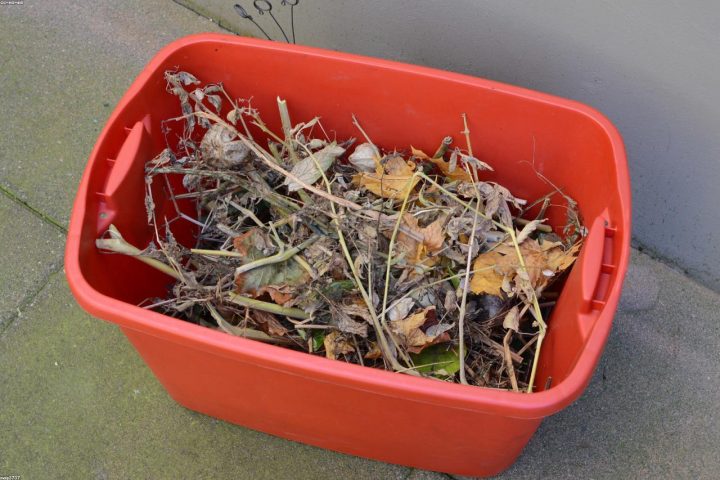
- Heavy contractor bags: 3 mil, poked with about 20 half-inch holes, kept in shade. Fine if you have no space, but you need to open and add water twice a summer or the pile in the middle dries out completely.
The steps are simple. Rake or vacuum leaves. Run a lawn mower over them once if you have oak or beech, which cuts finishing time nearly in half. Load them into the bin, tamping every foot or so with your boot. Water each layer until it feels like a wrung-out sponge. Put the bin somewhere shaded, ideally under a north-facing wall or a canopy tree. Then walk away for a year.
Come back in 12 months for maples and birch, 18 to 24 months for oak. You will know it is finished when the leaves are unrecognizable, the color of used coffee grounds, and the pile smells faintly of forest floor, not sour or ammoniated.
What can go wrong
The two failures I see most often, in my own piles and in ones I have consulted on, are moisture-related.
A pile that dries out will simply stop. The leaves crumble but stay recognizable, and the mycelium never really establishes. You will see white patches only in the wettest layer near the bottom. Fix it by soaking the pile thoroughly, ideally with rainwater or dechlorinated tap water, and covering the top with a piece of cardboard weighted with a brick.
A pile that stays too wet and packs down turns into black sludge that smells like a pond. This happens most often with maple leaves piled fresh and un-shredded in a plastic bag. If you catch it, fork the whole thing out onto a tarp, let it dry a day, and rebuild with more air pockets. If it has gone fully anaerobic, spread it thin on a pathway and start over.
The third issue, less common: pill bugs and slugs colonize the pile in a wet year. This is not actually a problem for the mould itself, but be aware when you spread finished material near seedling flats in spring.
How to use the finished product
I use leaf mould four different ways on my quarter acre of production beds, and each one uses a different consistency.
- Soil conditioner, worked in: 1 to 2 inches spread on top of a bed in fall and forked in shallow, about 3 inches deep. This is where the biggest structural improvement to clay soil comes from.
- Seed-starting mix, sieved: Push year-old mould through a half-inch hardware cloth screen, then mix 1 part mould with 1 part coarse sand and 1 part sifted garden compost. Better germination than any bagged mix I have tried, and about $0 per flat.
- Mulch for perennials and shrubs: 2 to 3 inches spread around blueberries, currants, rhubarb, and asparagus. Holds moisture through August dry spells better than wood chips and does not tie up nitrogen.
- Woodland edge and shade beds: The natural home. Spread thick, 3 inches or more, and let the worms do the incorporation.
One bed I converted from packed red clay in 2021, using nothing but two annual applications of leaf mould and cover crops, went from a penetrometer reading of about 300 psi at 4 inches down to roughly 90 psi by fall of 2024. Same bed, same tool, same operator. That is a real change in what roots can do.
The economic case, if you need one
A 2 cubic foot bag of bagged compost runs about $8 at my local garden center. To top-dress a 100 square foot bed at 1 inch, you need roughly 8 cubic feet, so about $32 per bed per year. I have 22 beds. That is $704 a year I do not spend, because 60 bags of leaves in October become enough finished mould to cover everything by the following fall.
The Cornell Waste Management Institute has been recommending backyard leaf composting for decades on exactly these grounds. The material is already on your property, or a block away, and the alternative is a landfill or a municipal yard that trucks it 30 miles.
Frequently asked questions
How long does leaf mould really take, honestly?
Maples and birch, shredded and kept damp, will be usable at 10 to 12 months. Un-shredded oak in a dry bin will take 24 months, sometimes 30. Shredding and consistent moisture are the two variables you control. Adding a shovel of finished compost to the pile as a fungal starter can shave a couple of months off.
Can I add nitrogen to speed it up?
You can, but you shift it toward compost and away from leaf mould. If you throw in grass clippings and coffee grounds, the pile will heat up, run through bacterially, and finish in about 4 months, but you lose the fungal character and the water-holding structure. If you want compost, make compost. If you want leaf mould, be patient.
Is leaf mould acidic? Will it hurt my vegetables?
Finished leaf mould from mixed hardwoods usually tests between 6.0 and 6.8 pH, which is right in the range most vegetables want. Oak-heavy mould can run down to 5.5, which is why it is excellent around blueberries and rhododendrons but worth mixing with a bit of wood ash if you are top-dressing a brassica bed.
Do I need to turn the pile?
No. Turning is a bacterial-compost habit. A leaf pile actually finishes better if you leave it alone, because you do not disrupt the fungal network as it establishes. Check moisture twice a summer and otherwise ignore it.
Can I use leaves from a lawn treated with herbicide?
Skip them. Persistent herbicides like clopyralid and aminopyralid can survive composting and damage tomatoes, peas, and lettuce for two full seasons. If a neighbor uses a lawn service, ask what they spray, or find leaves from an untreated yard.
Further reading
Trusted references we consulted while researching this piece. All external.