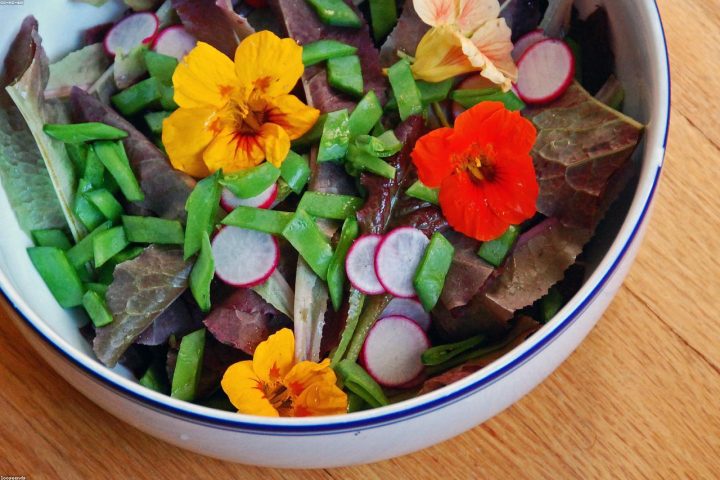
A dinner salad for four is about 100 grams of leaves. That works out to one loose double-handful per person, and if you have never put a bowl of undressed greens on a kitchen scale, do it once. Most first-year gardeners plant 12 lettuce transplants, harvest whole heads twice, and wonder why the row is finished by early June. The fix is not more lettuce. It is a small bed, sown on a rhythm, cut low and cut often.
The math that changes how much you plant
If your household eats a green salad three times a week from May through November, that is 26 weeks and roughly 78 salads, or about 7.8 kg of finished leaves for the season. Cut-and-come-again baby leaf yields somewhere between 500 and 700 grams per square meter per cutting when soil, water, and spacing all cooperate. A single sowing gives you three usable cuts before it tires. One square meter, grown well, produces about 1.8 kg across its life.
To carry a family of four across the whole warm season you need 4 to 5 square meters of lettuce in the ground at any moment, staggered so that beds are at different ages. In imperial numbers, that is one 4 x 12 ft bed, or two 4 x 6 ft beds working in rotation. Not the whole garden. Just a corner.
Bed size and layout
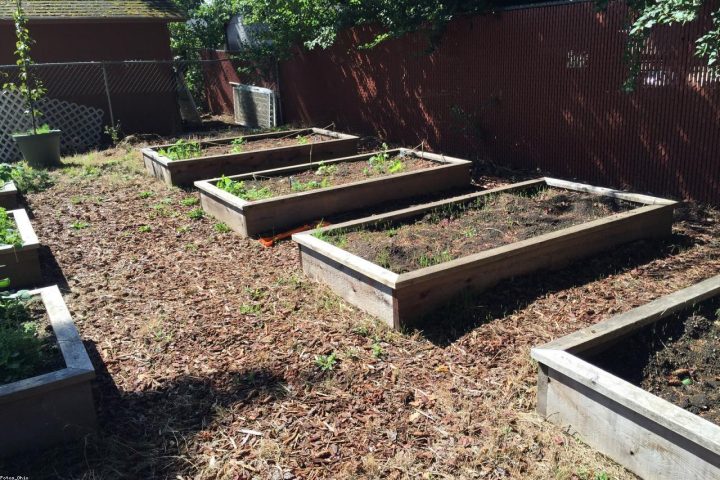
I run mine as two beds, each 1.2 m wide by 3 m long, which gives 3.6 m² per bed. One bed is in the productive phase (being cut) while the other is in the growing phase (recently seeded). When bed A tires after its third cut, bed B takes over, and bed A gets forked, composted, and re-sown inside a single afternoon.
Rows run across the short axis of the bed, spaced 10 cm apart. I sow at roughly 1 gram of seed per row-foot, which lands about 60 seeds per foot of row. That crowding is the point. Baby leaf is not a hearting crop, and thickly sown lettuce grows upright, which gives you clean cuts and less soil splash.
The sowing rhythm for zone 7a
Here is the calendar I run in the Appalachian foothills, where our last frost lands around April 15 and the first hard frost around October 20. Yours will slide by a week or two, but the intervals hold anywhere from zone 6b to 8a.
| Sowing | Date | First cut | Notes |
|---|---|---|---|
| 1 | March 25 | Mid-May | Under low tunnel |
| 2 | April 15 | Early June | Direct sow, open bed |
| 3 | May 5 | Mid-June | Standard mix |
| 4 | May 25 | Early July | Heat-tolerant mix only |
| 5 | July 15 | Mid-August | Germinate under 30% shade cloth |
| 6 | August 20 | Late September | Return to standard mix |
| 7 | September 10 | Mid-October | Row cover carries it into November |
Every 14 to 21 days, with one deliberate gap through the worst heat. The July 15 sowing is the one most gardeners miss, and it is the one that keeps the August table stocked.
How to cut so the bed regrows
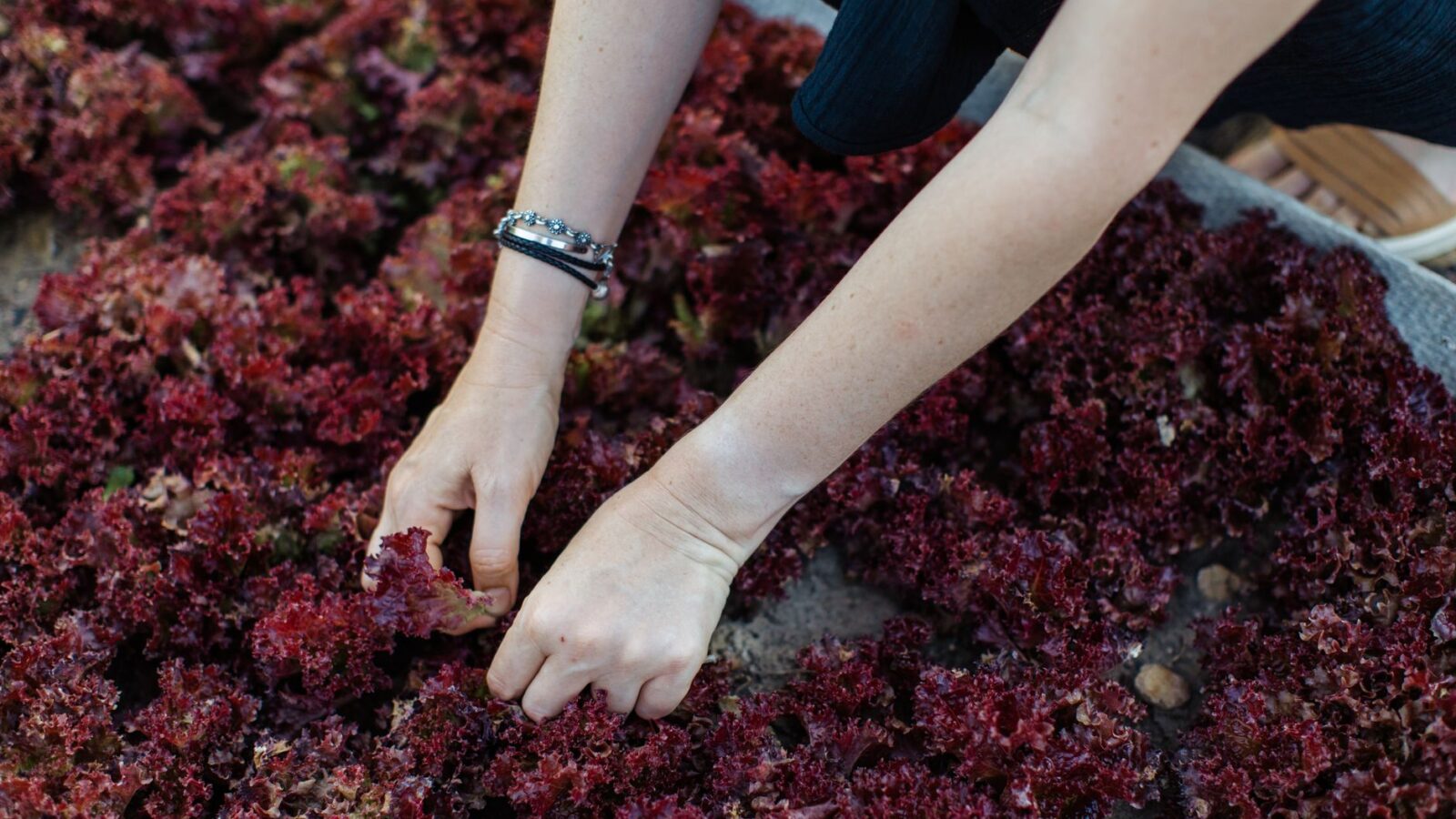
Baby leaf is ready when leaves stand 8 to 12 cm tall, which is roughly 28 to 35 days after sowing depending on soil temperature. Use a sharp harvest knife or a serrated bread knife. Grip a small bunch of leaves in one hand, and cut cleanly at 2.5 cm (one inch) above the crown, leaving the growing tip untouched. Not lower. If you cut into the crown you have killed that plant, and the row will look moth-eaten on the second pass.
Rinse in cold water within an hour, spin dry, and refrigerate in a lidded container. Leaves cut in cool morning air will keep 5 to 7 days. Leaves cut at 2 pm in July will keep three, if you are lucky.
A single sowing normally gives three cuts. The first is the largest and cleanest. The second regrows in about 12 to 15 days at roughly 75 percent of the first. The third comes in 15 to 18 days at maybe half. After that third cut, pull the bed out. Fourth cuts taste bitter and the plants are trying to bolt.
Varieties that earn their space
For spring and fall sowings, Johnny’s Salad Mix or their Allstar Gourmet Lettuce Mix is honest, reliable, and germinates evenly. For the harder shoulder of summer, look at Muir (a green batavian bred for heat and slow bolting), Ezrilla (a red oakleaf that holds its color), and a few Salanova one-cut heads if you want prettier plates for company.
Skip the cheap grocery-rack seed. The germination difference between a $4 packet from a serious breeder and a $1.29 rack packet is the difference between one full harvest and one patchy failure. Cornell’s Vegetable Program has good, region-tested lettuce notes if you want to compare cultivar performance for yourself (Cornell lettuce production).
The July problem
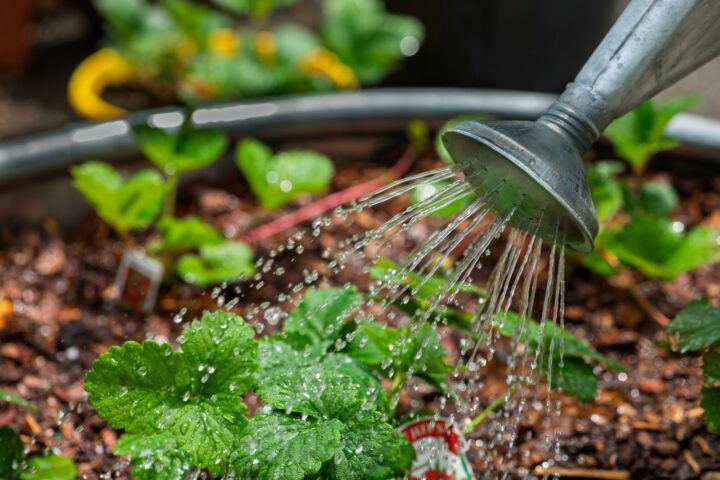
Lettuce germinates poorly above 24 C soil temperature (75 F) and bolts quickly above 27 C air (80 F). In our summers that means late June through late July is the hard patch. Three moves keep the July 15 sowing alive. First, sow into flats in a shaded corner and transplant when a cloudy stretch appears. Second, drape 30 percent shade cloth over the bed for the first 10 days after emergence. Third, water lightly twice a day until true leaves appear, then back off to once daily.
If a bed bolts before you have finished cutting it, mow it flat, compost the whole thing, and move on. Bitter is bitter. There is no rescue for a bolted crop.
Things that quietly wreck a bed
What I check on every visit, in the order I check them:
- Slug slime on stems. Set a shallow beer trap at soil level, or scatter iron phosphate pellets around the perimeter.
- Yellow inner leaves at 20 days. Nitrogen is short. Side-dress a light handful of Espoma Plant-tone per row-meter and water in.
- Papery brown leaf edges (tipburn). Soil is drying between waterings. Mulch the paths and lengthen the drip cycle, do not add fertilizer.
- White fuzzy mildew on undersides. Airflow is poor. Thin more aggressively on the next sowing, and cut the current bed hard to open it up.
- Aphids in the crown. A hard spray of water at dawn for three days running usually clears them without any spray.
What the season actually costs
Two 3.6 m² beds, one full season, real numbers from my records last year: seed cost $28, compost topdress $22 across two rounds, drip line and timer amortized at $12, and row cover replacement $9. That is $71 total for about 12 kg of finished salad, or roughly $5.90 per kilogram. A 142 g clamshell of organic spring mix at my local co-op runs $5.99, which comes to $42 per kilogram. Home-grown lands well under a fifth of retail, with better flavor and a much shorter chill chain.
Frequently asked questions
Can I grow enough salad in containers instead of beds?
Yes, but the numbers change. A 60 cm x 40 cm window box (0.24 m²) holds one sowing and gives about 400 grams total across three cuts. You would need six or seven boxes in rotation to feed four people three salads a week. Deep beds are simpler if you have the ground.
Do spinach and arugula follow the same rhythm?
Arugula, yes: sow at the same intervals, cut at 2.5 cm, expect two good cuts before it flowers. Spinach is slower to regrow and often gives only one full cut before bolting once days pass 14 hours of light, so treat it as a single-harvest crop from April into early June, then again from September.
Is direct-seeding or transplanting better for baby leaf?
Direct-seed whenever soil temperature is between 10 and 22 C. Transplant only during the July heat window, when transplants raised in shade give you a two-week head start over anything sown into hot ground.
How do I actually keep cut leaves crisp for a week?
Wash in water below 10 C within an hour of cutting, spin dry until leaves no longer stick to the bowl, then store in a rigid container with a clean dry cotton dish towel on top of the leaves. The towel absorbs the last of the surface moisture and prevents the slimy edges you get from a plastic bag.
Can I overwinter lettuce in zone 7a?
A late-September sowing under a low tunnel with medium-weight row cover (1.25 oz) will hold through most of December and often into January if you skip harvesting during hard freezes. Regrowth slows to a crawl below 5 C soil, so treat winter beds as a stored harvest, not a producing one.
Further reading
Trusted references we consulted while researching this piece. All external.