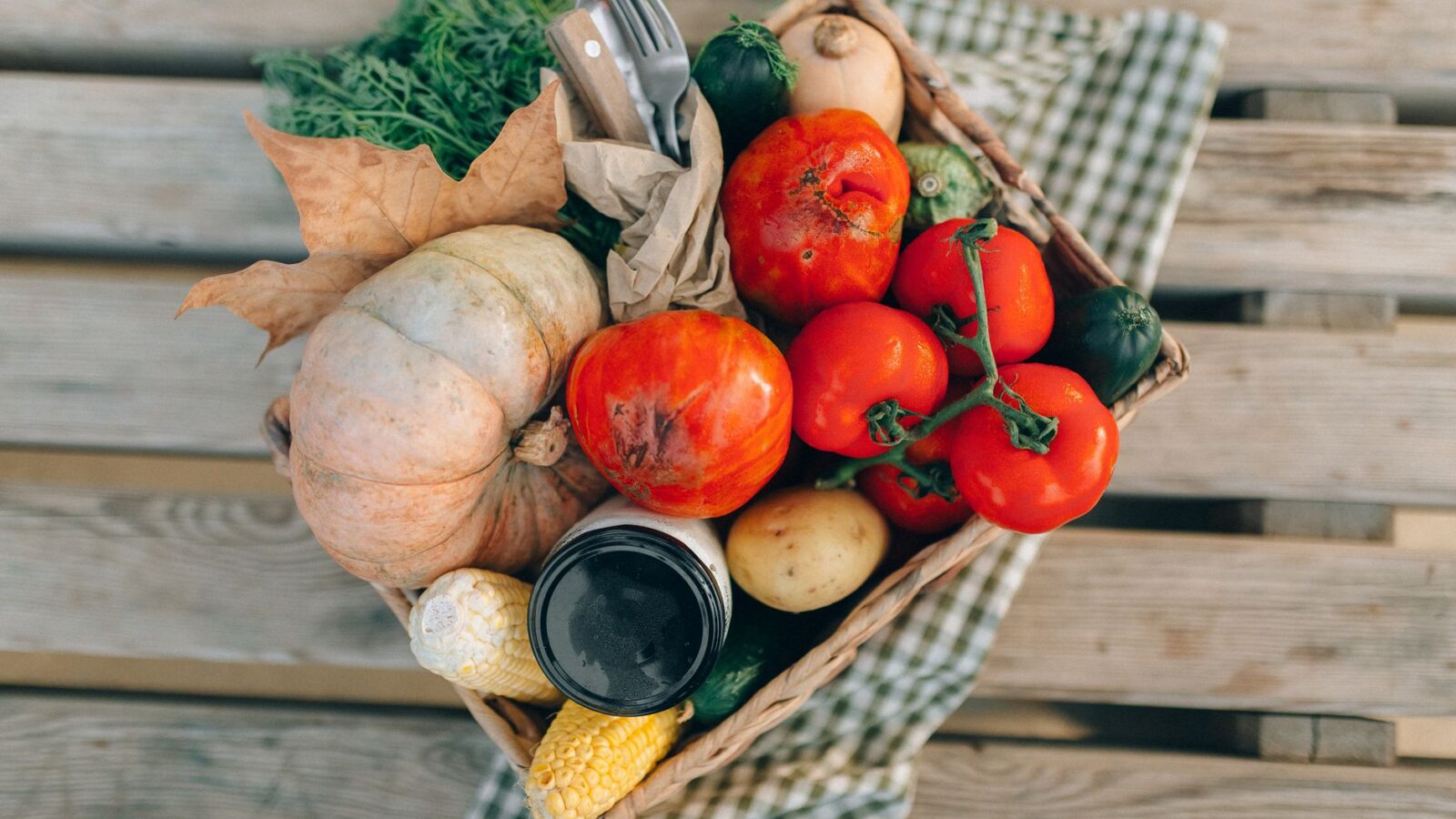
Most houses built after 1970 have no root cellar, and the ones that do usually have a finished basement running 68F all winter, which is worse than useless for storing carrots. The good news is that a garage corner, an unheated basement stairwell, a north-facing porch, or a secondhand fridge in the mudroom can hold three to five months of harvest if you match each crop to the space you actually have. This is what fall harvest storage looks like when you skip the fantasy and work with the house you own.
What “storage conditions” actually means
Every storage crop wants a specific combination of temperature and humidity. Onions want cool and dry. Carrots want cold and swampy. Winter squash wants warm and dry. Confuse them and everything rots or shrivels by January.
The University of Minnesota Extension storage guide groups vegetables into four buckets based on those two variables, and that framework maps almost perfectly onto the four cold spots in a typical suburban house.
- Cold and moist (32-40F, 90-95% RH): carrots, beets, parsnips, celeriac, cabbage, leeks.
- Cool and moist (40-50F, 85-90% RH): potatoes, most apples, pears.
- Cool and dry (35-50F, 60-70% RH): onions, garlic, shallots.
- Warm and dry (50-60F, 50-70% RH): winter squash, sweet potatoes, pumpkins.
Reading your house before you harvest
Buy a $12 indoor/outdoor thermometer with a min/max memory. The AcuRite 00613 works well and reads humidity too. Put one probe in each candidate spot for two weeks in mid-October and one week in mid-December, and write down the range.
In my 1978 farmhouse in Madison County, the unheated back stairwell holds 36-42F from November through February at 80% humidity. The attached garage swings from 28F on a cold snap to 55F on a sunny afternoon. The mudroom sits at 52-58F all winter. Each spot stores a different crop, and I stopped fighting that years ago.
If your house has none of those, a secondhand fridge in an unheated space is the workhorse. Set to 33F, wrap it in a moving blanket to reduce compressor cycling, and you have a perfect cold-and-moist cave for about $80 used and roughly $3 a month in electricity.
The crop-by-crop table
| Crop | Ideal temp | Humidity | Best home spot | Realistic shelf life |
|---|---|---|---|---|
| Carrots, beets, parsnips | 32-38F | 95% | Fridge crisper in perforated bags, or bin of damp sand in garage | 4-6 months |
| Cabbage | 32-38F | 90% | Spare fridge, outer leaves on, unwrapped | 3-4 months |
| Potatoes (Kennebec, Yukon Gold) | 42-48F | 90% | Unheated basement in cardboard boxes, dark | 4-5 months |
| Onions, garlic | 35-45F | 65% | Mesh bags in cool closet or attic near eaves | 5-8 months |
| Winter squash (butternut, kabocha) | 50-55F | 60% | Guest bedroom floor, mudroom shelf | 3-6 months |
| Sweet potatoes | 55-60F | 85% | Cardboard box near a warm interior wall, after curing | 4-6 months |
| Apples (Fuji, Winesap, Arkansas Black) | 32-38F | 90% | Separate fridge or garage cooler, kept away from potatoes | 3-5 months |
Curing is not optional
Three crops need a curing step before they go into storage, and skipping it is the single most common reason a harvest fails by Thanksgiving.
- Winter squash: hold at 80-85F for 10 days after harvest to toughen the skin. A sunny porch or a spare room with the door closed works. Butternut cured this way keeps 40% longer than uncured fruit.
- Sweet potatoes: 85F and 85% humidity for 7 days. I use a plastic tote with a damp towel and a seedling heat mat inside a closet. Uncured sweets rot in a month.
- Onions and garlic: two to three weeks in a shaded, airy spot until the necks are papery and rustle when you squeeze them. A window screen on sawhorses under a porch roof is ideal.
Potatoes want a shorter cure: seven days at 55-60F in the dark to heal skin nicks before they go into their real storage spot.
The four home setups that actually work
The unheated garage cooler
Take a 48-quart cooler, drill four small vent holes near the lid, and set it on the coldest garage wall. Line the bottom with damp (not wet) builder’s sand from Home Depot, layer carrots or beets in it with the shoulders not touching, and close the lid. The cooler buffers the daily temperature swing so a garage that hits 28F outside holds 34F inside the cooler. Check weekly and pull anything soft.
The secondhand fridge
Set the dial to the coldest setting that does not freeze water in a cup on the top shelf, usually 33-34F. Store apples and cabbage on the top shelves, root crops in perforated produce bags in the crispers. Do not store apples with anything else if you can help it, because they release ethylene and will sprout your potatoes and yellow your cabbage within a month.
The unheated basement or stairwell
This is the natural home for potatoes and winter squash if it runs 45-55F. Put potatoes in single-layer cardboard flats, cover with newspaper for darkness, and stack no more than three high so air moves. A cheap $15 hygrometer will tell you if you need a shallow pan of water to raise humidity toward 90%.
The cool interior closet
Guest bedrooms, back closets against exterior north walls, and mudrooms often sit at 55-62F. That is squash and sweet potato territory. Lay them on cardboard so they do not touch, leave 1 inch between fruits, and rotate them a quarter turn every three weeks so no single spot stays in contact.
What failure looks like, and what to do
Storage rot rarely announces itself. It shows up as one soft spot on a butternut in late December, a chemical whiff when you open the potato box, or a sudden line of frost on the inside of your fridge door.
Walk your storage every seven to ten days. Pull anything with softness, mold, or a wet patch, and use the rest of that same crate within a week. One rotten apple genuinely does spoil the barrel, because Botrytis and Penicillium spread through bruise contact and airborne spores.
If squash skins are wrinkling and hollowing, humidity is too low: move a bowl of water into the room. If potatoes are sprouting long white shoots by January, the space is too warm: relocate the box or rub sprouts off, use fastest, and next year plant a longer-storing variety like Kennebec or German Butterball instead of Red Norland.
A realistic month-by-month plan
September, cure squash and sweets, dig main-crop potatoes on a dry day. October, harvest storage cabbage after the first light frost sweetens it, pull carrots and beets before the ground freezes hard. November, move onions from the porch to their winter closet once nighttime lows dip below 35F. December through March, check every bin weekly and eat aggressively from whatever is nearest its edge.
A garden that gave me 90 pounds of squash, 60 pounds of potatoes, 35 pounds of carrots, and 20 pounds of onions last year fed two adults from October to April without a single trip to the produce aisle for those items, all stored in a garage cooler, a mudroom shelf, and a $70 Craigslist fridge.
Frequently asked questions
Can I store vegetables in a heated basement if I use a spare fridge?
Yes, and for most modern houses that is the single best setup. A 16-cubic-foot fridge will hold roughly 80 pounds of root crops plus a head or two of cabbage. Keep it in the basement or garage, not the kitchen, so the compressor exhaust does not fight your house heat.
Do I need to wash carrots and beets before storing them?
No. Brush off loose soil, twist off the tops leaving a half-inch stub, and store them dirty. Washing removes the microbial layer that protects the skin and adds surface moisture that seeds rot. Rinse them when you cook.
Why do my onions sprout in January when the neighbors’ last until April?
Two likely causes: they were harvested before the tops fell over naturally, or they are stored above 50F. Short-day and sweet varieties like Vidalia store two months at best. For long storage, grow Copra, Patterson, or Redwing and cure them fully.
Can potatoes and apples share the same fridge?
Only if they are in separate sealed bags on opposite shelves. Apples emit ethylene gas, which triggers potato sprouting and softens carrots. A dedicated apple fridge or a lidded plastic tote inside the fridge solves it.
How cold is too cold for winter squash?
Below 50F, butternut and kabocha develop chilling injury that shows up as sunken tan patches and rapid decay within two weeks. If your only cool space runs 40F, cook and freeze your squash as puree instead. It holds a year at 0F and takes 20 minutes on the stove.
Further reading
Trusted references we consulted while researching this piece. All external.