A perfectly weed-free lawn requires regular applications of selective herbicides. Most homeowners who try to eliminate weeds entirely without chemicals end up with patches of weeds that simply replace the killed ones. The system fights against itself.
A better approach accepts that some weeds will always be present, but uses cultural practices to dramatically reduce their prevalence. We have managed our small lawn without herbicides for years; weeds account for perhaps 10-15% of the lawn cover, which most visitors do not notice. This is what works.
Why weeds win in conventional lawns
Lawn weeds thrive in conditions that stressed turf grass cannot compete in: compacted soil, low fertility, mowed too short, watered too lightly. Most weed problems are downstream effects of one or more of these conditions.
The “control weeds” approach tries to fight this by killing the existing weeds while leaving the underlying conditions unchanged. New weeds replace the killed ones because the conditions still favor them. Cycle of dependency on herbicides develops.
The “improve conditions” approach changes the underlying factors so grass outcompetes weeds. This is slower but does not require ongoing chemical inputs. After 2-3 years of improved conditions, weed pressure drops dramatically.
Strategy one: mow tall
Most homeowners mow their lawns far too short. The standard 2-inch mowing height is half of what most cool-season grasses prefer. Short grass cannot photosynthesize efficiently, develops shallow roots, and leaves exposed soil where weed seeds germinate.
Raise mowing height to 3.5-4 inches. The lawn looks slightly different (less golf-course tidy, more “established meadow”), but the benefits are significant: deeper roots, less weed germination (taller grass shades the soil), less heat stress, less watering required.
This single change has the largest impact of any lawn weed control method. Try it for a season. The results are usually visible within 2-3 mowings.
Strategy two: deep infrequent watering
Daily shallow watering produces shallow grass roots and surface conditions that favor weed germination. Deep weekly watering produces deep roots and surface conditions that grass tolerates better than most weeds.
The schedule: water deeply once per week (one inch of water in a single application). Skip watering during weeks with rain. The grass tops may yellow slightly between waterings; the roots stay strong and deep.
This counterintuitive approach takes some adjustment. Lawns that look slightly stressed in midsummer recover quickly and outcompete weeds across the season.
Strategy three: improve soil over time
Compacted, depleted soil favors weeds. Soil improvements gradually shift conditions toward grass dominance.
Top-dress with a half-inch of compost across the lawn in early autumn. The compost works into the soil as worms and microbes carry it down. Repeated annually for 3-5 years, this transforms the topsoil.
Aerate compacted areas with a core aerator (rentable from hardware stores for $40-$80 per day). Compacted soil has reduced root penetration and increased weed germination. Aeration once per year in autumn shows visible improvement.
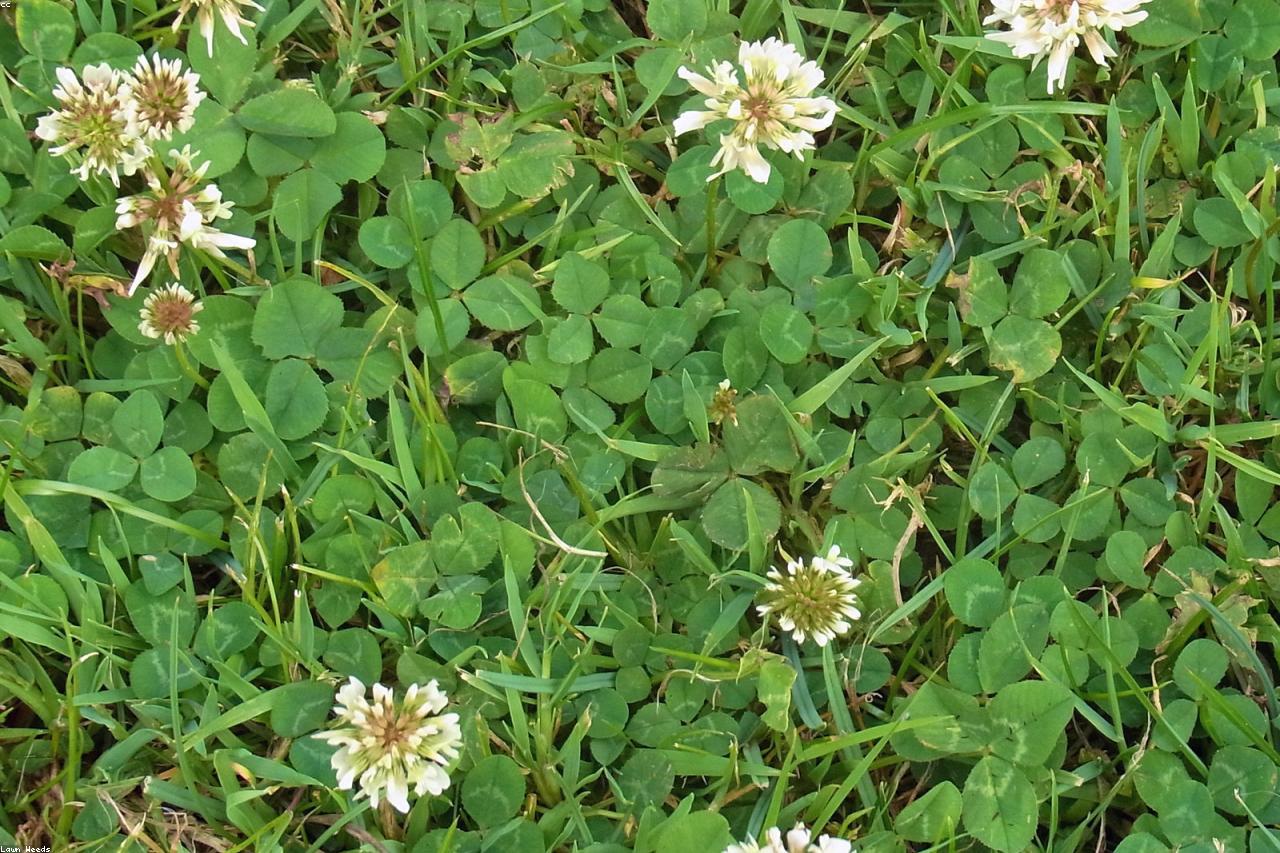
Overseed with a quality grass-and-clover mix in late summer or early autumn. Mixed-species lawns are more weed-resistant than monoculture lawns. Microclover or white clover blended with grass produces a dense cover that weeds struggle to penetrate.
Strategy four: hand-pull strategic weeds
Some weeds are worth pulling; others are not. Use this priority system to focus your weeding efforts on the highest-impact targets.
- Always pull: dandelions and other taprooted weeds before they flower (each plant produces hundreds of seeds; preventing flowering eliminates a generation)
- Often pull: creeping perennial weeds spreading into new areas (Bermuda grass, ground ivy in northern lawns)
- Sometimes pull: annual weeds in established patches (preventing seed production)
- Usually ignore: isolated low-growing weeds, white clover (it fixes nitrogen and benefits the lawn), occasional weed flowers (which support pollinators)
Strategy five: accept some weeds
A small percentage of weeds in a lawn is normal and not worth fighting. Most lawns with reasonable management have 5-15% weed cover. A casual observer rarely notices this; an obsessive one cannot tolerate even 1%.
Some weeds are actively beneficial: white clover fixes nitrogen and supports pollinators; dandelions provide early-spring food for native bees; chickweed and other edible weeds can be picked for salads.
The mental shift from “no weeds tolerated” to “manageable weed presence” reduces a lot of frustration. A lawn that is dense, green, and reasonably uniform looks excellent even with some species diversity.
A realistic annual routine
Our lawn maintenance follows this rough rhythm.
Spring: mow at 3.5-4 inches starting at first growth. Hand-pull dandelions before flowering. Skip fertilizer (encourages flushy growth that needs more mowing and is more weed-prone).
Summer: continue tall mowing. Water deeply once per week or skip during rainy stretches. Let the lawn brown if drought occurs; it recovers.
Early autumn: overseed any thin patches with grass-and-clover blend. Aerate compacted areas. Top-dress with half-inch of compost across the lawn.
Late autumn: final mowing slightly lower (3 inches) before winter. Apply leaf mulch (run leaves through mulching mower).
Total time across a season for a typical small lawn: about 25-35 hours of total work, including mowing. Weeds remain present but manageable; lawn looks healthy and inviting.
A pesticide-free lawn requires a different approach than a chemically managed one. Mowing tall, watering deeply, improving soil, and accepting modest weed presence together produce a lawn that gradually outcompetes most weeds without chemical input. The shift takes a few seasons. The result is a lawn that needs less ongoing attention, supports more wildlife, and costs less to maintain.
The mowing height that does most of the work
Of all the strategies above, raising your mowing height has the largest single effect on weed control. Most homeowners we work with mow at 2-2.5 inches, which keeps the lawn “tidy” by conventional standards but actively favors weed germination.
The reason is shade. Weed seeds need light to germinate. Short grass exposes soil to sun, providing the germination signal. Taller grass shades the soil enough to prevent most weed seeds from sprouting. The effect compounds: each week of taller mowing reduces the next week’s weed population, while each week of short mowing increases it.
Raise your mowing height to 3.5-4 inches and hold it there for a full season. The lawn will look slightly different than your neighbors’ (less golf-course, more meadow-influenced), but the change in weed pressure becomes visible within a few months. By the end of one season, the same lawn that had 15-20 percent weed cover at short mowing typically drops to 5-10 percent at taller mowing, with no other intervention.
The other benefit is drought tolerance. Taller grass has deeper roots. A lawn mowed at 4 inches stays green through dry stretches that brown out the same lawn at 2 inches. The water savings across a typical summer often exceed 30 percent.
Related reading from the journal
You might also appreciate Natural Pest Control That Works (And What's Just Folk Wisdom), Organic Aphid Control for Vegetable Beds, and Pest Pressure Through the Garden Year: What to Expect When from the journal.
Further reading
Trusted references we consulted while researching this piece. All external.