More home gardens are started for tomatoes than for any other vegetable. More home gardens are abandoned because of disappointing tomato harvests than because of any other crop. The plant is finicky, the timing is touchy, and the problems are many.
After several seasons of testing varieties, methods, and recovering from failures, we have a much clearer picture of what works. This is a troubleshooting-heavy guide, organized around the problems people actually encounter rather than the theoretical perfect setup.
Variety selection: the underrated decision
The biggest variable in tomato success is variety selection, not soil or watering. A good variety in poor conditions outperforms a poor variety in perfect conditions.
For reliable production in most home gardens: indeterminate cherry tomatoes (Sungold, Sweet 100, Black Cherry). These produce hundreds of fruits per plant from late June through hard frost. They are less prone to cracking, splitting, and blossom-end rot than larger varieties.
For slicing tomatoes: hybrid varieties bred for disease resistance (Celebrity, Big Beef, Better Boy) produce more reliably than heirlooms in disease-prone areas. Heirlooms produce better flavor but require more management.
For containers and small spaces: determinate varieties stay compact (3-4 feet) and produce a heavy concentrated harvest. Roma, San Marzano, and bush varieties work well in containers.
Soil and planting
Tomatoes are heavy feeders. They want rich loose soil with abundant compost and good drainage. A bed prepared with 3-4 inches of finished compost worked into the top 6 inches of soil supports a season of strong growth.
Plant deeply. Tomato stems grow roots wherever they touch soil. Bury the transplant up to its first set of true leaves; this nearly doubles the root system. Pinch off any leaves that would be below the soil line.
Plant after the last frost has passed and the soil has warmed (above 60F). Tomatoes planted into cold soil sit and sulk for weeks even if they survive. A weather-delayed planting on warm soil grows much faster than an early planting on cold soil.
Watering: the consistency problem
Inconsistent watering causes most tomato disasters: cracking, blossom-end rot, scab, and weak flavor. Tomatoes want even moisture, not the dry-then-soaked cycle that comes from inattentive watering.
The schedule: 1.5 inches of water per week during peak season, delivered in 2-3 deep waterings rather than daily light ones. Use drip irrigation or soaker hoses to keep water off leaves (which spreads disease). Mulch 3 inches deep with straw to maintain consistent soil moisture.
Container tomatoes need daily watering in summer (sometimes twice daily in heat waves). Self-watering containers cut this dramatically and produce more consistent tomatoes.
Support: skip it and regret it
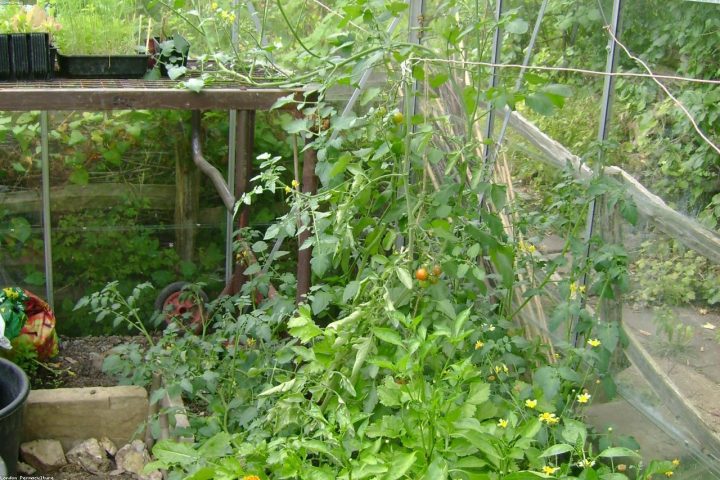
Tomatoes need support, especially indeterminate varieties. The standard tomato cage from hardware stores is too small for indeterminate varieties; they outgrow it by July and collapse the cage by August.
- For indeterminate cherry tomatoes: a 6-foot stake or sturdy cage. Tie up at least every 12 inches of growth.
- For full-sized indeterminate tomatoes: Florida weave between sturdy stakes, or a tall heavy-duty cage (3 feet wide, 6 feet tall).
- For determinate varieties: standard tomato cages work fine. The plants stay short enough.
- For container tomatoes: a 5-foot stake inserted into the container at planting time. Tie at intervals.
Common problems and what to do
The five most common tomato problems and their actual solutions:
Blossom-end rot (sunken brown spots on the bottom of fruit). Caused by inconsistent watering, not by calcium deficiency in the soil. Even watering and consistent mulch prevent it; adding calcium supplements rarely helps.
Cracking (split skin on ripening fruit). Caused by dry-then-wet watering cycles. Maintain consistent moisture; mulch heavily; avoid watering after dry stretches with sudden heavy applications.
Early blight (lower leaves yellow with dark spots, gradually spreading up). Spread by water splash from infected soil onto leaves. Prevention: drip irrigation, mulch to prevent soil splash, remove lower leaves as plants mature, avoid working with wet plants.
Tomato hornworm (large green caterpillar that eats leaves and fruit). Hand-pick visible worms in the evening when they are most active. Plant dill and parsley nearby to attract braconid wasps that parasitize the worms.
Yellow leaves with no specific pattern. Often nitrogen deficiency or general nutrient depletion. Side-dress with compost in mid-season; apply a liquid organic feed (fish emulsion, comfrey tea) every 2-3 weeks.
Harvest and storage
Tomatoes ripen best on the plant when daytime temperatures are 70-85F. In late summer when temperatures stay above 95F, ripening slows or stops; tomatoes harvested at the slightly-pink stage can ripen indoors at cooler temperatures with better flavor than those left on the plant in extreme heat.
Never refrigerate ripe tomatoes; the cold flattens flavor and ruins texture. Store at room temperature, stem-side down. Use within a few days of ripening.
For preservation, simple options include freezing whole washed tomatoes (use frozen in soups and sauces), canning with proper acid addition, dehydrating into oven-dried tomatoes, or making and freezing fresh tomato sauce.
Successful tomato growing comes down to variety selection, consistent watering, generous spacing, proper support, and patient troubleshooting when problems appear. A first-year tomato disaster does not mean tomatoes are not for you; it means you learned something specific that next year will reward. By the third season most gardeners have figured out their conditions and produce more tomatoes than they can use.
The variety choice that matters most
For new tomato gardeners, the single most important decision is variety, made before any soil or water consideration. The right variety for your conditions can perform well despite imperfect management; the wrong variety fails despite perfect management.
For first-time tomato gardens in zones 5-7, we recommend starting with two indeterminate cherry tomato plants and one determinate paste tomato plant. Cherry varieties (Sungold, Sweet 100, Black Cherry) produce hundreds of fruits per plant, ripen reliably, and forgive watering imperfections. Determinate paste tomatoes (San Marzano, Roma, Amish Paste) produce a concentrated harvest suitable for sauce; their compact form is easier to manage than indeterminate slicers.
Hold off on heirloom slicing tomatoes (Brandywine, Cherokee Purple, Mortgage Lifter) until year two. These produce some of the best tomato flavor available but are notoriously fragile: prone to disease, cracking, sunscald, and uneven ripening. They reward experienced gardeners with patience and good growing conditions, not first-year gardeners working through new soil and irrigation systems.
Modern hybrid slicers (Celebrity, Big Beef, Better Boy) are good middle-ground options. They produce reliable slicing tomatoes with better disease resistance than heirlooms and better flavor than commercial hybrids. Worth a single plant in year one to see how they perform in your conditions.
Related reading from the journal
You might also appreciate Late-Season Sowing for an Extended Harvest, Pollinator-Friendly Vegetable Garden Design, and Building a Raised Bed That Will Last Twenty Years from the journal.
Further reading
Trusted references we consulted while researching this piece. All external.