Companion planting charts have circulated in garden books for decades, but most of them are wildly inconsistent and rarely based on actual research. One book swears tomatoes and basil are inseparable; another insists they compete for the same nutrients.
A handful of companion planting relationships have actually been studied in field trials and proven to provide measurable benefits. The rest is either neutral (does no harm, does no proven good) or counterproductive. This guide focuses on the combinations with real evidence.
The combinations with real evidence
Five companion planting relationships consistently show up in research as providing genuine benefits.
- Marigolds (especially French marigold, Tagetes patula) with vegetables. Reduces root-knot nematode populations in soil. Effect is measurable but slow; benefits show up after a full season of marigolds in the bed.
- Three Sisters (corn, beans, squash). The traditional indigenous combination. Beans fix nitrogen used by corn; corn supports climbing beans; squash leaves shade soil and suppress weeds. Mutual benefit is well-documented.
- Onions, garlic, leeks near aphid-prone plants. Strong allium smell deters some aphid species. Effect is modest but documented in research trials.
- Flowering plants among vegetables to support beneficial insects. Diverse plantings increase predator insect populations, reducing pest pressure. Borage, dill, parsley letting flower, alyssum, and yarrow all earn their place.
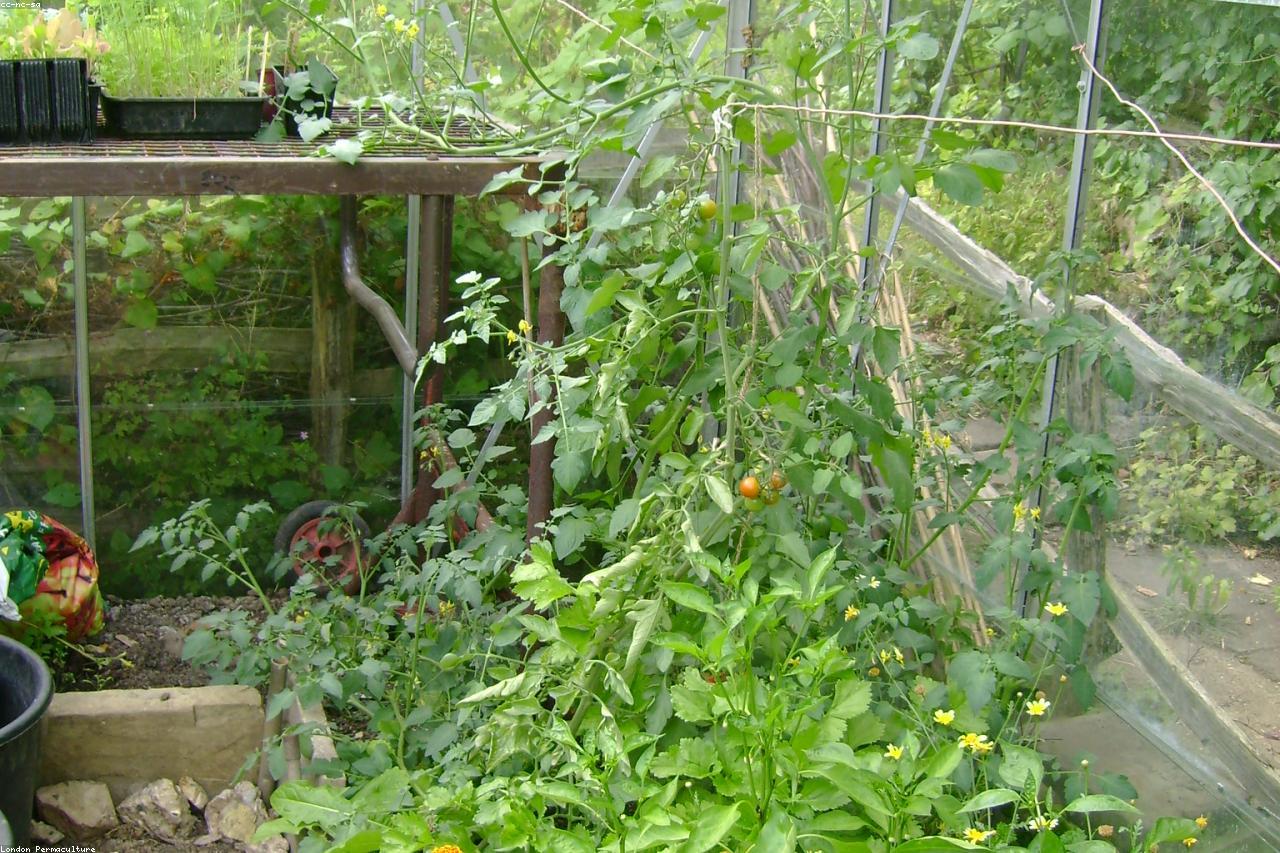
- Tall plants providing shade to heat-sensitive crops. Tomatoes shading lettuce in summer extends the lettuce harvest by weeks. Spatial-relationship companion planting rather than chemical.
The famous claims that do not hold up
Several popular companion planting claims have not held up to research scrutiny.
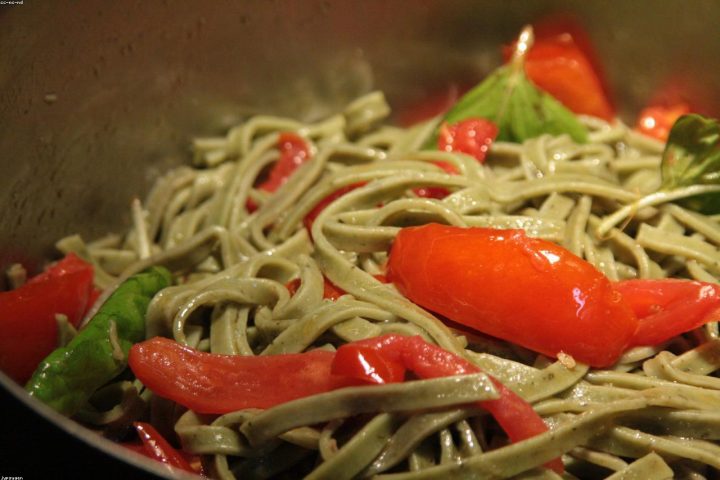
Tomatoes and basil. Often called the perfect pairing because they “improve” each other’s flavor. Field trials show no flavor or growth benefit. They make a nice meal together; the kitchen pairing has been romanticized into garden mythology. They grow fine together because they have similar conditions, not because of any inter-plant chemistry.
Carrots and tomatoes. The classic “carrots love tomatoes” pairing from a famous 1970s book. Research has not found measurable benefit. They are not antagonistic, but the celebrated symbiosis is not real.
Beans and onions. Some traditional charts list these as incompatible; modern research finds no negative interaction. Plant them together if it suits your bed layout.
Cucumbers and herbs (especially sage). Some folk charts warn of cucumber suppression by sage. Trials find no effect. The two grow fine together.
The patterns that work for general garden health
Beyond specific pairings, several broader principles consistently improve garden performance.
Diversity. A garden with many plant species and varieties has fewer pest problems and more beneficial insects than a monoculture, regardless of the specific plant relationships. Plant ten varieties of vegetables rather than three.
Continuous bloom for beneficial insects. Beneficial predator insects (ladybugs, lacewings, hover flies) need nectar to support their adult life stages. Plant alyssum, calendula, borage, dill, and other small flowers throughout vegetable beds.
Smell diversity. Plants with strong scents (basil, dill, sage, oregano, thyme, lavender, marigold) confuse pest insects by disrupting the scent trails they use to find host plants. The mechanism is real, even when specific paired-plant effects are not.
Living mulch. Low-growing plants (creeping thyme, white clover) between rows of larger crops suppress weeds, retain moisture, and provide habitat for beneficial insects. Modest yield reduction in the primary crop is offset by reduced labor.
The companion plants worth growing
If your goal is to integrate companion plants into a vegetable garden, focus on these reliably useful species.
- French marigold (Tagetes patula): reduces nematodes, attracts beneficials, simple to grow
- Borage: exceptional pollinator plant, edible flowers, deep taproot brings up minerals
- Dill (allowed to flower): attracts predator wasps, hosts swallowtail caterpillars
- Alyssum: low ground cover, continuous bloom, supports hover flies
- Calendula: repels some pests, edible petals, long-blooming
- Nasturtium: trap crop for aphids, edible leaves and flowers
- Cosmos: attracts predator insects, beautiful, easy to grow
- Bee balm: exceptional pollinator plant, edible flowers, perennial
How to integrate them practically
Three approaches work well for integrating companion plants into a vegetable garden.
Ends of rows. Plant marigolds, alyssum, or borage at the ends of every vegetable row. This is the lowest-effort approach and still provides meaningful pollinator and pest-deterrent benefits.
Border bands. Run a 12-inch strip of mixed flowering companions along the front and back of each bed. Continuous companion presence with minimal disruption to vegetable planting.
Interplanted scatter. Tuck companion plants throughout the bed (every 3-4 feet between vegetables). Most labor-intensive but most effective for pest dynamics. Best for established gardeners comfortable with mixed plantings.
What to skip
A few specific claims do not hold up and following them can waste time or space.
Detailed three-foot-bed charts assigning every vegetable a “best friend” and “worst enemy.” Most pairings beyond the few above are not supported by evidence.
Walnut trees near anything. The juglone allelopathy from black walnut is real and does affect many garden plants. This is one folk claim that is genuinely true; keep gardens 50+ feet from black walnuts.
Sunflowers near beans (the claim that sunflowers suppress beans). Research finds no measurable effect. Plant freely.
Lettuce near carrots (the “complementary root systems” claim). They grow fine together because they have similar conditions, not because of any plant-to-plant magic.
Companion planting works at the level of garden ecology, not at the level of specific magical pairings. Plant a diverse garden with continuous bloom for beneficial insects, use the proven specific companions (marigolds for nematodes, alliums against aphids, flowering plants to support predators), and skip the elaborate charts that promise specific plant-to-plant benefits without evidence. The general principles are powerful; most specific claims are folklore.
A simple test for any companion planting claim
Companion planting literature is full of claims with varying levels of evidence. A simple test separates the genuinely useful claims from the folk wisdom.
Ask three questions about any companion planting recommendation. First, has the claim been tested in controlled trials with measurable outcomes? Many traditional pairings have never been formally tested. Second, does the claim have a plausible biological mechanism? “Plant X loves plant Y” is not a mechanism. “Plant X produces compound Z that repels insect W” is a mechanism. Third, does the recommended pairing have a plausible scale at which to work? Some companion effects require dense plantings; others work even from a single plant.
Apply these questions to the famous tomato-basil pairing. Has it been tested? Yes, multiple times. Result: no measurable yield or flavor benefit from interplanting. Mechanism? The “improves flavor” claim has no biological basis. Scale? Even if there were a benefit, a single basil plant would not produce it for several tomatoes. Conclusion: a folk pairing rather than a research-supported one.
Apply the same questions to French marigolds for nematodes. Tested? Extensively. Mechanism? Specific terpenes in marigold roots are nematicidal. Scale? Requires dense planting (10+ plants per square foot) for full effect. Conclusion: a research-supported relationship with clear scale requirements.
This filter applied across companion planting claims separates the useful from the folkloric.
Related reading from the journal
For more along these lines, see Container Vegetables That Outperform In-Ground Ones, From Garden to Pantry: Preserving Your Harvest, and How to Garden When You Travel Often.
Further reading
Trusted references we consulted while researching this piece. All external.