Rainwater harvesting articles usually assume you have a downspout to intercept. For apartment-dwelling gardeners, that assumption is mostly wrong. You probably have a balcony with a railing, a patch of concrete the size of a parking space, and a strong sense that there should be a way to make use of the rain that falls on it.
There is. We grew on a 5-by-12 foot balcony for two years before moving to our current garden. The rainwater systems we used in that space were not the catalogue versions; they were quieter, smaller, and built around the constraints of urban living. Some of them are still in use by friends in apartments.
What you are working with
A typical balcony intercepts a small but useful amount of rain. A six-by-ten foot balcony with a partial overhang collects roughly thirty-five to forty gallons from a single one-inch rainfall, assuming the rain has anywhere to go besides the balcony floor drain. Even a covered balcony catches some volume during wind-driven storms.
Your job is to redirect that water into containers rather than letting it run into the drain. The smaller your collection area, the simpler your system can be. There are three reliable approaches, ordered from simplest to slightly less simple.
Method one: tarp catchment
The lowest-tech method is to stretch a small tarp between two corners of the balcony with a low point in the middle that drains into a five-gallon bucket. Position the tarp where rain will hit it directly. Most building bylaws permit small temporary tarps; a small one in your own balcony space is rarely a concern.
A four-by-six foot tarp in a typical balcony storm catches three to eight gallons. That is enough to water a balcony herb and vegetable garden for several days. Drain the bucket after each storm; do not store water more than a few days in an open container.
Total cost: $10 for the tarp, $5 for the bucket, $2 for clip-on tarp grommets. Total install time: twenty minutes. Limitations: visually intrusive, only works during rain events, no overflow management.
Method two: window box collector
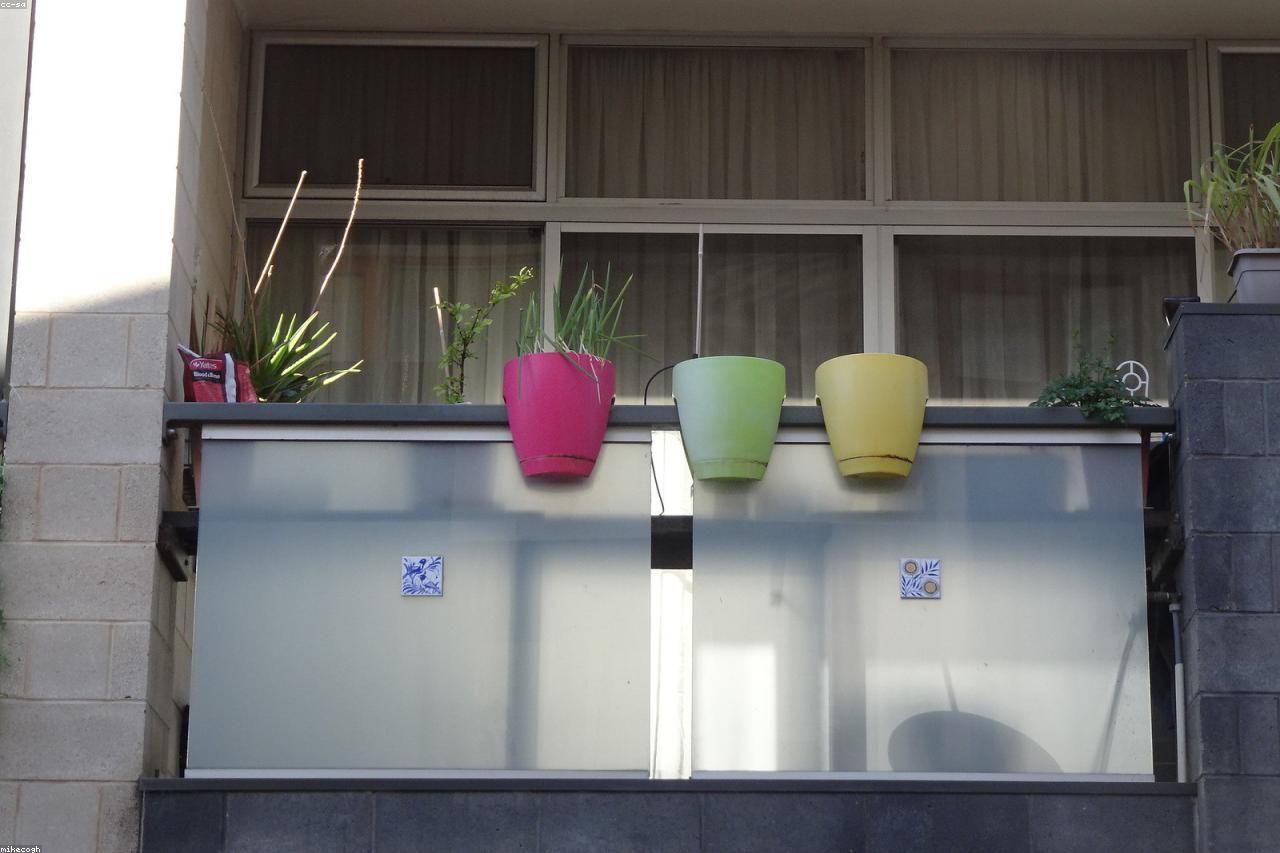
A slightly more elegant approach uses a railing-mounted window box as both planter and collector. The box drains through a tube into a bucket on the floor below. Plants in the window box benefit from direct rainfall; excess water from heavy storms drains into the bucket for later use.
This setup integrates with existing balcony plantings and looks intentional rather than improvised. Most building managers do not notice or care about it. Capacity is limited (typically a five-gallon bucket below per planter), but the system requires no monitoring during storms.
The clever piece is the drainage tube. A short section of half-inch vinyl tubing from the planter drainage hole to the bucket below makes the connection clean. Use silicone sealant where the tube enters the bucket lid to keep mosquitoes out.
Method three: gutter-and-rain-chain
A balcony with an overhead roof line, awning, or balcony above it offers the most potential. If water sheets off that surface during rain, you can intercept some of it with a small section of gutter installed underneath, directing the flow into a barrel or large bucket.
This requires either landlord permission (for a permanent install) or a removable bracket setup (for renters). A two-foot section of vinyl gutter, two L-brackets, and a downspout can be assembled for under thirty dollars. Output is significant during real storms; we collected fifteen gallons in a single thunderstorm with a similar setup.
What to use the water for
Balcony rainwater is ideal for the things you already need to water: herb pots, lettuce containers, tomato containers, hanging baskets, and any acid-loving plants you have. The lack of chlorine and dissolved minerals makes it noticeably better than tap water for sensitive plants.
Avoid storing for more than five days. Use a tight-fitting lid with a small screened opening to keep mosquitoes out. Pour from the bucket into a watering can rather than dipping; a watering can with a long thin spout is the most useful balcony tool.
Common questions and limitations
Three constraints limit balcony rainwater harvesting compared to backyard systems. You cannot store much (typically less than ten gallons before the bucket becomes a hazard). You cannot intercept much (limited collection area). And you may have building bylaws to navigate.
For small-space gardens, though, none of these are deal-breakers. A balcony herb garden needs a fraction of what an in-ground garden needs. Even a ten-gallon weekly collection covers most of a balcony’s watering needs during the rainier half of the year.
Small-space gardeners are often the most thoughtful about water because every drop is more visible. A balcony rainwater system is small but useful, and it builds the habit of paying attention to the rain in a way that backyards sometimes do not require.
What you can realistically grow with collected rainwater
Apartment rainwater harvesting feels small until you do the math on what it supplies. A six-by-ten balcony in a region with thirty inches of annual rainfall intercepts roughly 150 gallons across the year, even after evaporation and overflow losses. That is enough to fully water a balcony herb garden, a few tomato containers, and several lettuce planters for an entire growing season.
The key is matching collection to consumption. A single five-gallon bucket cleared after each storm sustains about a half-dozen container plants through normal weeks. During heat waves you may need to supplement with tap water; during rainy weeks you have surplus. The cycle averages out across the season.
One practical setup worth mentioning: keep a smaller two-gallon watering can next to the collection bucket. Pour from bucket to watering can, then water plants. The intermediate step prevents over-pouring on small containers and lets you spot debris that fell into the collection. Replace the can if mineral deposits build up; the bucket is harder to keep clean than a dedicated can, and small plants benefit from the cleaner intermediate step.
Related reading from the journal
Other entries worth your time: Reading Your Soil Moisture Without Buying a Meter, Seven Common Watering Mistakes Even Patient Gardeners Make, and How to Build a Simple Olla Watering System.
Further reading
Trusted references we consulted while researching this piece. All external.