American suburbs are remarkable in part for how many of them are wallpapered with one specific kind of grass. Kentucky bluegrass, mostly, kept short and uniformly green, watered through summer, treated for weeds, mowed weekly. The total area dedicated to this single plant species across the country is larger than any major national park.
There are better options for almost every site. Some are more biodiverse, some are lower-maintenance, some are simply more beautiful. None of them require the chemical maintenance and constant attention that conventional lawn turf demands. This is a survey of what to plant where the lawn used to be.
Why even consider replacing lawn
A conventional turf lawn requires:
- Weekly mowing through the growing season (30-40 mowings per year)
- Watering during dry stretches (typically one inch per week in summer)
- Fertilizer applications (often 2-4 per year)
- Weed control (often herbicide-based)
- Aeration (typically annually for compaction)
- Replanting damaged areas (often annually)
Option one: micro-clover or fescue lawn
If you want lawn-like ground cover but want it more sustainable, switch to a mixed-species lawn. Common alternatives include micro-clover (Dutch white clover bred for compact growth), fine fescue blends, or seed mixes designed for low-input lawns.
These mixes need significantly less watering than Kentucky bluegrass (typically half), less fertilizer (often none), less mowing (every 2-3 weeks instead of weekly), and tolerate drought without browning. They do not produce the perfectly uniform appearance of bluegrass, but they do produce something that reads as a meadow-influenced lawn.
Cost: $30-$60 per pound of seed; a typical small lawn replanting costs $100-$300. Maintenance: roughly half of conventional lawn. Visual: less uniform than bluegrass but acceptable for casual use.
Option two: no-mow native sedge meadow
Native sedge (Carex species) and short native grasses form low-maintenance meadows that look like prairie. Pennsylvania sedge (Carex pensylvanica) is the most commonly used species in eastern North America; it forms a 6-8 inch fine-textured ground cover that resembles a slightly wilder lawn.
Sedge meadows need essentially no mowing, no watering after establishment, and no fertilizer. They do need establishment patience: the first year is slow, year two shows progress, year three the meadow looks complete.
Cost: native sedge plugs are $1-$3 each, planted at 12-inch spacing (about 1 per square foot). A 200-square-foot conversion costs $200-$500. Maintenance: nearly zero after establishment. Visual: meadow-like, distinctly different from lawn but beautiful in its own register.
Option three: groundcover lawn alternatives
Several low-growing groundcovers replace lawn in areas that do not get foot traffic. Each has specific conditions where it thrives.
- Creeping thyme: sunny, well-drained sites. Aromatic, blooms in spring, tolerates light foot traffic
- Creeping sedum: sunny dry sites. Drought-tolerant, blooms early summer, no foot traffic
- Wild strawberry: partial shade. Edible berries, light foot traffic
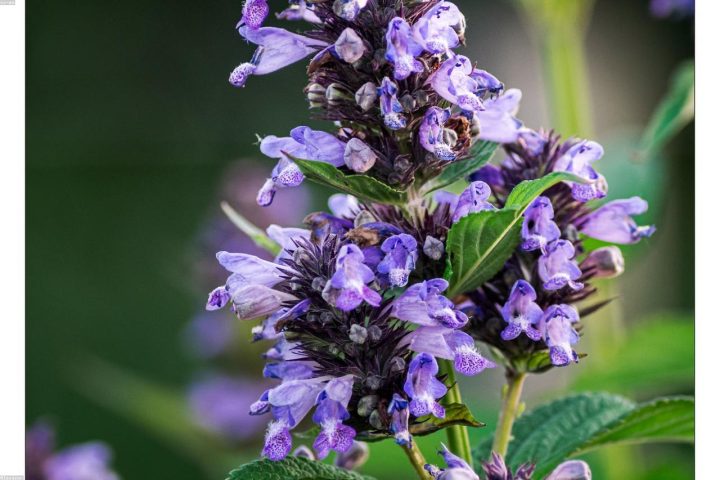
- Ajuga (bugleweed): partial shade. Spring blue flower spikes, no foot traffic
- Sweet woodruff: shade. White spring flowers, fragrant when crushed
- Mondo grass (Liriope or Ophiopogon): partial shade. Year-round green, light foot traffic
Option four: native wildflower meadow
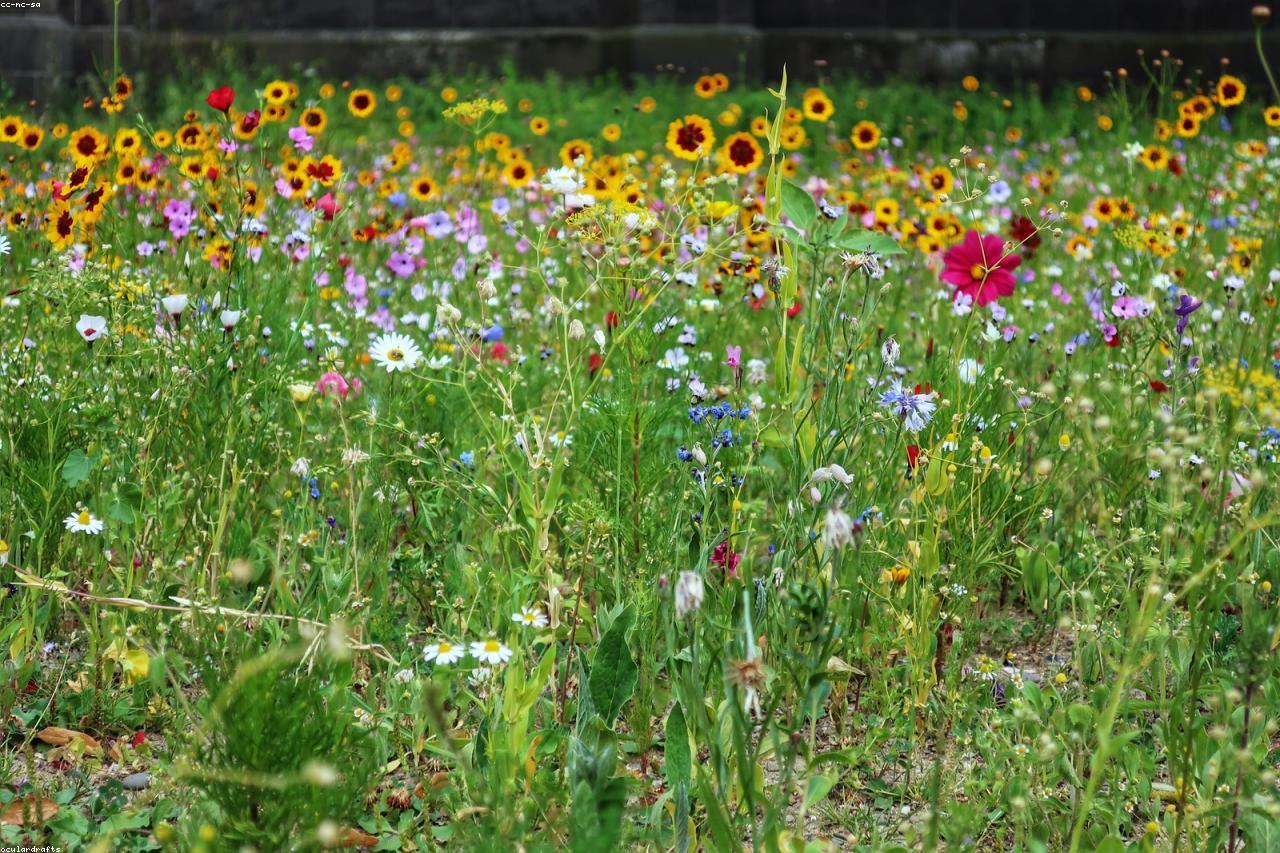
For larger areas (typically 200 square feet or more), a native wildflower meadow provides extraordinary biodiversity value and seasonal color. Mixes of native perennials, grasses, and flowering annuals establish over two or three years into a low-maintenance landscape.
This is the option with the highest ecological value. A mature native meadow supports dozens of pollinator species, host plants for butterflies, and considerable bird activity. It requires no water after establishment, no fertilizer, and only one annual mowing (typically in late winter or early spring).
The trade-off is appearance: wildflower meadows do not look like lawns. They look like meadows. This works on rural and large-suburban properties; it may face resistance in tightly designed neighborhoods. A clear path edge and a defined border (mulched strip, low fence) help distinguish “designed meadow” from “neglected lot.”
Option five: hardscape and ornamental beds
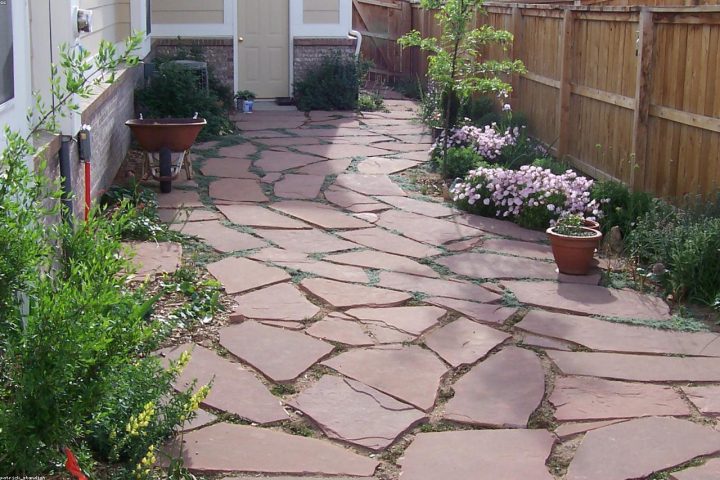
For the highest-design properties, replacing lawn with hardscape (patios, paths, gravel areas) plus ornamental perennial beds gives the most polished result. A patio is essentially maintenance-free; ornamental beds need annual care similar to any garden.
This is the most expensive option upfront and the most design-intensive. For homeowners willing to invest in landscaping rather than yardwork, it produces gardens that feel intentional and curated rather than functional. Less wildlife habitat than a native meadow, but more polish and accessibility.
A staged conversion approach
Most lawn-replacement projects work better as gradual conversions than as full replacements. Start with a small section (perhaps 100-200 square feet) of the least-used lawn area. Plant the alternative you choose. Let it establish for a season. Evaluate whether you like it.
If you do, expand the next year. Many properties end up with a hybrid: a small functional lawn area for foot traffic and play, surrounded by meadows, native beds, or groundcovers in the areas that do not get walked on. This produces the ecological benefits of the alternatives while keeping the practical functionality of lawn where it matters.
Lawn made sense for an earlier era. Replacing it with something more useful, more beautiful, or more ecologically valuable is one of the highest-leverage things a homeowner can do for their property. The transition does not have to be all at once; small staged conversions work fine. The result, over a few seasons, is a property that requires less and gives back more.
The first conversion: where to start
For homeowners convinced about replacing lawn but unsure where to start, the highest-leverage first conversion is the strip between the sidewalk and the curb (the “hellstrip” or boulevard area). This space is often neglected, hard to mow, frequently brown from heat reflection off pavement, and produces no useful function.
A hellstrip converted to a low-maintenance native or drought-tolerant planting accomplishes several things at once. The area no longer needs mowing or watering. It produces pollinator habitat in a high-visibility location, which neighbors notice. The plant selection (yarrow, sedum, native grasses, dwarf shrubs) handles the hot dry conditions that defeated lawn grass. And the conversion is visible from the street, demonstrating that lawn alternatives can look intentional rather than neglected.
The conversion takes a single weekend. Sheet mulch over existing grass with cardboard and 3-4 inches of wood chips in fall. Plant the following spring through the decomposed cardboard. Total cost for a 4-by-30 foot strip: roughly $50-$100 in plants, plus free wood chips from an arborist.
By the second season, the hellstrip looks established. Many homeowners we know who started here have expanded to convert front lawn sections within two or three years, having seen what is possible.
Related reading from the journal
If you found this useful, you may also like A Small-Garden Tree Planting Plan (Six Options), Vertical Gardens on Real Apartment Walls, and Designing for Year-Round Color Without Annuals.
Further reading
Trusted references we consulted while researching this piece. All external.