Chemical fertilizers are a fast fix that works against a slow problem. They deliver immediate nutrients to plants without addressing the underlying condition of the soil itself. Use them long enough and your soil becomes dependent on the input; biological activity declines, structure deteriorates, and each season requires more product than the last.
Organic soil building is the opposite approach. It builds genuine fertility (the soil’s own capacity to feed plants) over time rather than treating each plant individually. The result is a garden that grows more productive each year with less intervention. This guide describes the system we have used in our garden for the last several seasons.
The principle, in one paragraph
Healthy soil is alive. It contains billions of microbes, miles of fungal threads, and a complex network of worms, beetles, and other organisms that break down organic matter and make nutrients available to plant roots. When you build this living community, the soil feeds plants on its own. Chemical fertilizers bypass this community and gradually weaken it. Organic methods strengthen it.
The four pillars
Four practices, applied consistently for two to three years, transform almost any garden soil. Each one is simple. The cumulative effect is remarkable.
- Compost. Add two to three inches of finished compost as a top dressing every spring. This is the single most powerful amendment in any garden.
- Mulch. Keep the soil covered year-round with organic mulch. Bare soil loses moisture, structure, and biological activity at a striking rate.
- Cover crops. Plant cover crops in any bed that will be empty for more than four weeks. Roots and decomposing biomass feed soil life.
- Minimal disturbance. Avoid tilling. Minimize digging. Walk on paths, not on planting beds. Soil structure builds when left alone.
The role of compost
If you can only do one thing for your soil, compost it. A two-inch top dressing of finished compost in spring adds organic matter, microbial diversity, slow-release nutrients, and improves water retention and structure all at once. No chemical product comes close to this profile.
Quantity matters less than consistency. Two cubic yards of compost across a season-long garden is excellent. A single five-gallon bucket of compost across a small raised bed is still meaningfully helpful. Whatever you have, apply it every year, ideally in early spring.
The role of mulch
Mulch is the second-highest leverage intervention. A two to three inch layer of organic mulch (straw, shredded leaves, wood chips) on top of compost provides three benefits simultaneously.
It prevents the rapid breakdown of the compost layer by direct sun. Compost left exposed to summer sun loses its biological activity within weeks. Mulched compost remains active for months.
It retains soil moisture, reducing watering needs by thirty to fifty percent and providing the consistent dampness that soil life requires.
It slowly breaks down itself, adding additional organic matter to the soil beneath. Mulch is essentially slow-release compost.
The role of cover crops
Cover crops are plants grown specifically for the soil, not for harvest. They protect bare soil from erosion, suppress weeds, and (most importantly) feed soil life with root exudates and dying root tissue.
Different cover crops do different things. Legumes (clover, vetch, peas) fix atmospheric nitrogen into a form plants can use. Brassicas (mustard, daikon radish) break up compacted layers with deep roots. Grasses (rye, oats, barley) add abundant biomass and improve organic matter.
In a small home garden, two cover crop windows matter most: an autumn-planted overwintering cover (cereal rye or winter rye is hardy and inexpensive) and a quick summer break crop (buckwheat for any bed empty for four to six weeks). Both are easy to manage and dramatically improve soil over a few seasons.
The role of leaving the soil alone
The fourth pillar is the easiest to overlook because it requires inaction. Tilling, frequent digging, and walking on planting beds all compact soil, kill earthworms, and destroy fungal networks that take years to rebuild.
The no-till philosophy is increasingly common in organic gardening for a reason: gardens that move from regular tilling to no-till methods often show dramatic improvement in soil structure and crop performance within two years. The transition is sometimes slow at first (compacted soil takes time to recover) but the long-term gains are real.
The practical version of no-till in a home garden: prepare beds once and never till them again. Use a broad fork (a U-shaped tool that aerates without inverting layers) only when needed. Top dress with compost and mulch. Plant directly into the existing soil profile. Walk on dedicated paths, not on beds.
The realistic timeline
Genuinely healthy soil takes two to four years to build from a starting point of average garden soil. The first year shows modest improvement; the second year shows noticeable improvement; the third year shows the difference clearly. By year four, the soil typically supports vegetables that would struggle in average soil.
This sounds slow until you realize chemical fertilizer treats only the current season’s plants and leaves the soil no better (often worse) for the next season. Organic methods compound. Each year’s investment pays back in the next several years of garden performance.
Building healthy soil organically is a slow craft, and it is also one of the most quietly satisfying parts of gardening. Compost, mulch, cover crops, minimal disturbance. Apply these patiently for a few seasons and your garden becomes the kind of garden you wish you had started with.
What healthy soil actually feels like in your hands
The clearest sign that soil-building practices are working is the change in how the soil feels when you handle it. Specific tactile changes indicate genuine progress, separate from any chemical test.
Compacted depleted soil feels heavy, dense, slow to crumble, and cool but slightly damp without falling apart. A handful holds together when squeezed and breaks reluctantly when prodded. Smells faintly mineral or slightly stale.
Healthy soil feels light, friable, easy to crumble, and warm rather than cool. A handful breaks apart easily when squeezed and falls through fingers like cake crumbs. The smell is distinctly earthy and pleasant, similar to a forest floor after rain.
The transformation from one state to the other takes 3-5 years of consistent organic management. The visible changes appear gradually but consistently. By year two, the surface inch or two looks visibly improved. By year three, soil 6 inches down feels meaningfully different. By year five, the soil profile from surface to 18 inches deep has transformed completely.
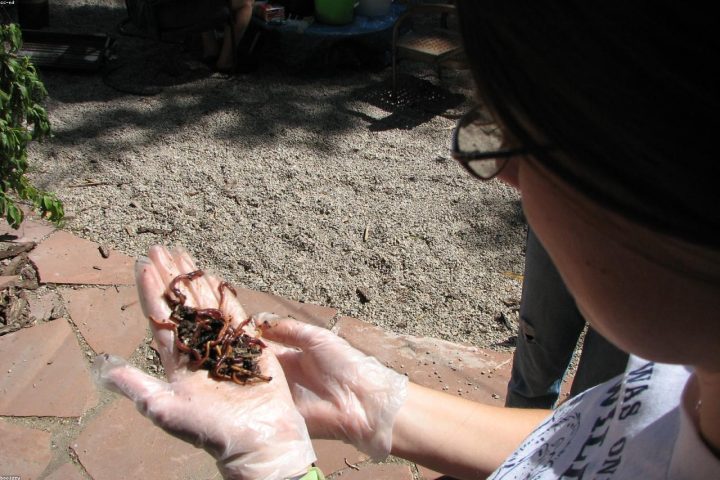
Worms are the most visible indicator. A garden built on compost and mulch accumulates earthworm populations rapidly. By year three, you should see 5-10 worms in any spade-full taken in moist conditions. By year five, that count often doubles. The worms are doing the work that compost and mulch enabled.
Related reading from the journal
If you found this useful, you may also like The Kitchen Scraps You Should Never Add to a Compost Bin, Mulches Compared: Which One Actually Helps Your Soil, and Reading Your Soil Without a Lab Test.
Further reading
Trusted references we consulted while researching this piece. All external.