Aphids are the most common garden pest. They appear on tender new growth in clusters, multiply rapidly in warm weather, and weaken plants by sucking sap. A serious aphid infestation can stunt growth, distort leaves, and reduce harvest significantly. They also spread plant viruses, which is sometimes more damaging than their direct feeding.
Most aphid outbreaks self-resolve within a few weeks if you do nothing, as predator populations build and consume them. Sometimes intervention is needed, though. Several organic methods work; some are more useful than others. This is what we have learned across many seasons.
What aphids are and how they spread
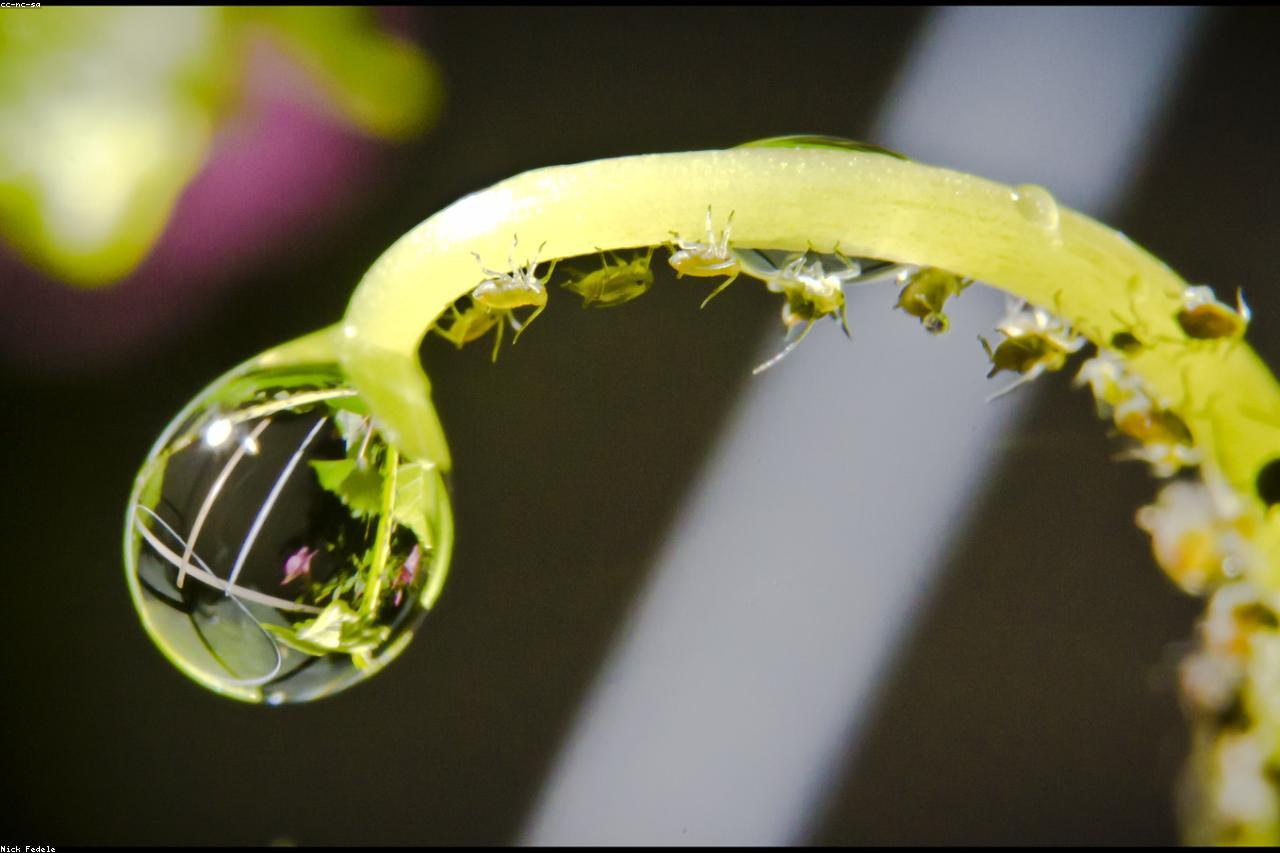
Aphids are small soft-bodied insects (1-3mm) that feed by piercing plant tissue and sucking sap. They come in many colors (green, black, yellow, red, gray) and species, but the management is essentially the same for all.
Aphids reproduce asexually in warm weather, with each female producing 50-100 young in her lifetime. Populations can double every 4-5 days under good conditions. A small initial infestation can become severe in 2-3 weeks if left unmanaged.
Aphids are spread by wind (winged forms develop when populations get dense), by ants (which “farm” aphids for their sweet excretion called honeydew), and through plant material brought into the garden. Most outbreaks start from a few aphids that arrive on a transplant or fly in from a nearby plant.
Method one: blast with water (free, often effective)
The simplest and one of the most effective methods. A strong spray of water from a hose dislodges aphids from plants. They cannot climb back; most die before reaching another plant.
Best applied: in the morning so leaves dry quickly. Targeted directly at the aphid clusters. Repeat every 3-4 days for 2 weeks during active infestation.
This method works on most aphid infestations on sturdy plants (tomatoes, peppers, brassicas, fruit trees). Avoid on delicate seedlings, which can be damaged by strong water spray.
Cost: zero. Effectiveness: moderate to high. Time required: 5-10 minutes per affected area, every few days during active management.
Method two: insecticidal soap (effective, targeted)
Insecticidal soap kills aphids on direct contact by disrupting their cell membranes. It has no residual effect (a spray today does not affect aphids that arrive tomorrow), but applied to existing populations it is highly effective.
Use commercial insecticidal soap (Safer’s Brand and others, $8-$15 for a quart) or make a homemade version: 1 tablespoon of mild liquid soap (Dr. Bronner’s castile is good; avoid detergent or dish soap with degreasers) per quart of water.
Apply directly to the aphid clusters, ensuring thorough coverage including the undersides of leaves. Apply in cool weather (morning or evening) to avoid leaf burn. Repeat every 5-7 days as needed.
The soap kills aphids it directly contacts but does not harm beneficials that arrive after the spray dries (typically within an hour). This makes it more selective than systemic pesticides.
Method three: encourage predator insects
The longest-term solution is supporting the predator insects that eat aphids: ladybugs, lacewings, hover flies, parasitic wasps. A garden with strong predator populations rarely has serious aphid problems.
Plant continuous-blooming flowering plants: alyssum, calendula, dill, cosmos, sweet alyssum, coriander letting flower. The nectar supports predator adult populations through the season.
Tolerate modest aphid populations; if you eliminate all aphids, you eliminate the food source for predators, and the next aphid wave (which always comes) finds no resistance.
Avoid pesticides, including organic ones, on flowering plants or when bees and other beneficials are active.
This approach has the longest lag time (2-3 years for full establishment) but produces the most permanent results.
Method four: pinch off heavily infested growth
For specific severe local infestations, simply remove the affected plant material. Aphids cluster on tender new growth; pinching off and disposing of these tips removes most of the population in one action.
Best applied: when aphid clusters are concentrated on a few specific stems or tips. The plant typically responds with healthy new growth that is not infested.
This method is fast and effective for spot problems. Less suitable for widespread infestations across many plants.
Method five: handle the ants first
Ants “farm” aphids for honeydew. They protect aphid colonies from predators and move aphids to fresh plants. An aphid problem on a plant with ants moving up and down the stem is partially an ant problem.
To break the ant-aphid relationship: apply Tanglefoot or another sticky barrier around the base of the affected plant. Ants cannot cross the sticky surface. Without ant protection, predator insects can attack the aphid colony freely.
The ant problem itself can be addressed with diatomaceous earth or boric acid baits if needed, but breaking their access to the aphids is often enough.
Method six: trap crops with nasturtium
Aphids strongly prefer nasturtium over most vegetables. Planting nasturtium at the perimeter of vegetable beds draws aphids to the nasturtium plants instead of the main vegetables.
The nasturtium becomes heavily infested; pull and dispose of affected plants periodically to remove the aphid populations. This is a sacrifice planting; the nasturtium does the absorbing work that protects your main vegetables.
Best for: aphid-prone gardens that have struggled with the pest in previous years. Plant nasturtium at the start of the season as preventive trap crops.
The combined approach that works
Our aphid management combines several approaches based on the situation.
Spring (before aphids appear): plant trap crops (nasturtium) and predator-supporting flowers (alyssum, calendula). Establish habitat for beneficial insects.
First aphid sighting: leave it alone for 1-2 weeks to allow predator response. Most light infestations self-resolve.
Persistent or growing infestation: water blast to knock back populations. Apply insecticidal soap to aphid clusters if water blasting is not sufficient.
Severe localized infestation: pinch off heavily affected growth. Combine with water blasting on remaining areas.
Recurring problems on specific plants: consider whether the plant is wrong for your conditions, or whether the soil needs improvement (stressed plants attract more aphids).
Aphids are manageable rather than eliminable. Most outbreaks self-resolve within weeks as predators arrive. Active interventions (water spray, insecticidal soap, pinching back affected growth) handle persistent problems. Long-term, supporting predator insects through flowering plants is the most effective and sustainable approach. The combined approach reduces aphid problems to manageable levels in 1-2 seasons without harming the beneficial insects that depend on them.
Related reading from the journal
If you found this useful, you may also like Pest Pressure Through the Garden Year: What to Expect When, The Slug Solution: Five Methods Ranked, and Squash Vine Borers: A Realistic Defense Plan.
Further reading
Trusted references we consulted while researching this piece. All external.