A search for “garden uses for coffee grounds” returns thousands of articles, most of them confident and many of them wrong. The same pattern shows up for eggshells, banana peels, and a handful of other beloved kitchen scraps. The folk wisdom has multiplied faster than the research.
This is a gentle re-examination of the most common garden hacks involving kitchen scraps. Some are genuinely useful. Some are mildly useful but overrated. A few are not useful at all and one is actively harmful. Sorting them out makes you a slightly better gardener and a more skeptical reader.
Coffee grounds: useful but overrated
The myth: coffee grounds are highly acidic and excellent for blueberries and other acid-loving plants. They repel slugs and ants. They are a high-nitrogen fertilizer.
The reality: used coffee grounds are nearly pH neutral (most of the acid leaches into the brewed coffee). Their nitrogen content is moderate, around two percent by weight, similar to grass clippings. They do not repel slugs in any meaningful quantity; isolated studies have shown minimal effect.
The actual value: coffee grounds are an excellent green material for compost piles, contributing nitrogen and organic matter in moderate amounts. As a soil amendment, they improve soil structure when worked into the top few inches. They are not a magic fertilizer and they will not noticeably acidify your soil.
How to use them: add to compost in moderation (up to twenty percent of total greens). Mix into soil at planting time, no more than a thin scattering across the surface. Avoid heaping piles of coffee grounds on the surface, which can form a crust that repels water.
Eggshells: yes, but slowly
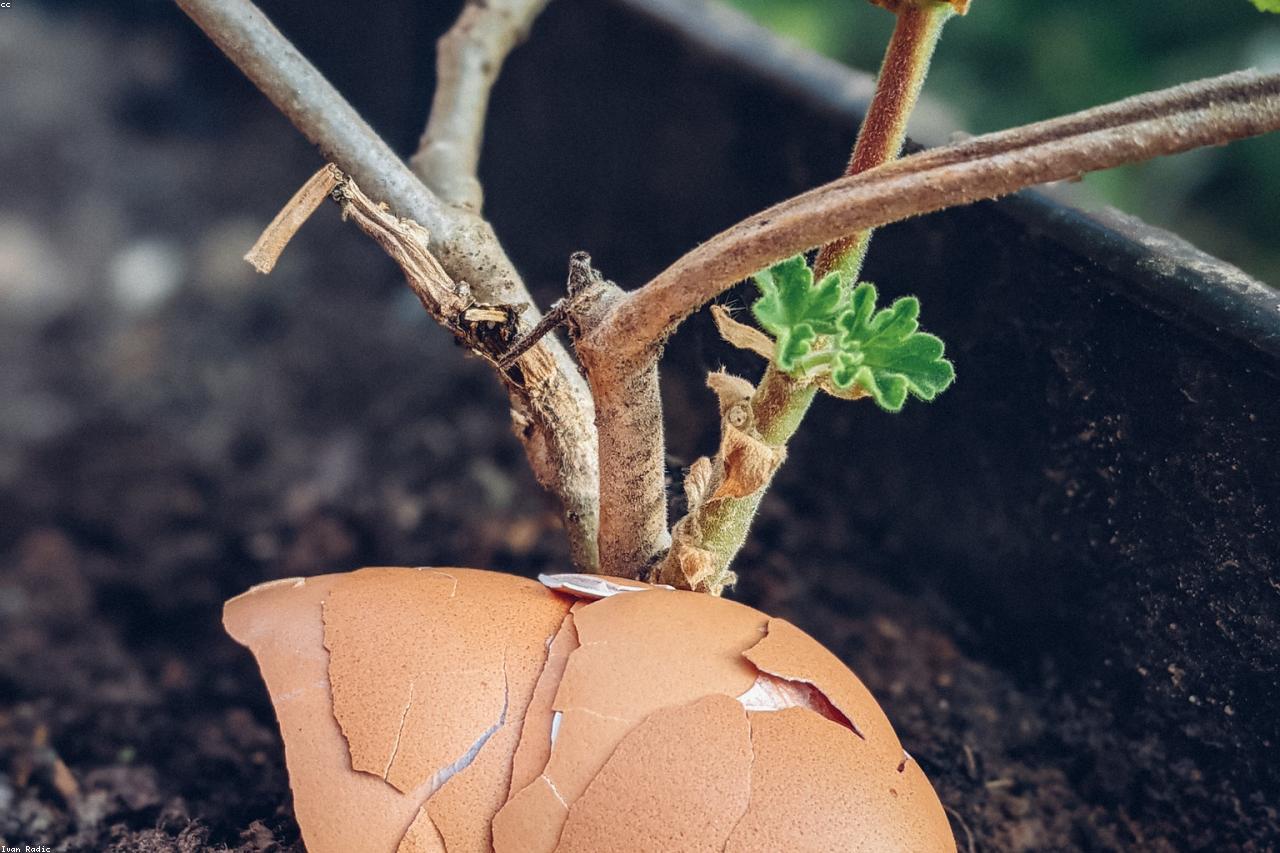
The myth: crushed eggshells in the soil add calcium and prevent blossom-end rot in tomatoes. Whole eggshells deter slugs.
The reality: eggshells are about ninety percent calcium carbonate, but they break down slowly in soil. Whole shells take a year or more to release any calcium. Crushed shells are slightly faster but still slow. Ground or powdered shells are most available, though still take weeks to months.
For blossom-end rot specifically, the issue is rarely soil calcium deficiency; it is usually inconsistent watering, which interferes with calcium uptake. Adding eggshells does not address the underlying water-stress problem. Better watering does.
How to use them: yes, add them to compost. They improve the compost’s mineral content. As a direct amendment, grind them to powder for fastest availability. Do not expect them to fix blossom-end rot; fix your watering first.
Banana peels: mildly useful
The myth: banana peels in the soil are a major source of potassium, perfect for roses and flowering plants. Burying them around plants releases potassium directly to roots.
The reality: banana peels contain potassium, but the amount is modest. A medium banana peel contains roughly 100 milligrams of potassium; a standard soil application for a rose bush needs roughly 1 gram. You would need ten peels per rose. Not impossible, but not the miracle source it is sometimes described as.
The actual value: banana peels make a small but real contribution to soil potassium when buried or composted. They break down quickly compared to other kitchen scraps, which is a benefit.
How to use them: chop and bury in the top inch of soil around flowering plants. Composting them is also fine. The “banana peel water” method (peels soaked in water for several days) extracts some nutrients into a usable liquid feed, though the contribution per peel remains modest.
Epsom salt: mostly hype
The myth: Epsom salt (magnesium sulfate) added to soil produces healthier plants, sweeter tomatoes, and bigger blooms.
The reality: Epsom salt addresses magnesium deficiency, which is uncommon in most home gardens. Soils that genuinely lack magnesium do benefit from supplementation. Soils that already have adequate magnesium see no benefit and can develop nutrient imbalances from regular Epsom salt applications.
The actual value: Epsom salt is a valid amendment for confirmed magnesium-deficient soils, identified by a soil test. It is not a general garden tonic and indiscriminate application can cause harm.
How to use it: do a soil test first. If magnesium is deficient, apply Epsom salt at the rate recommended by the test (typically one tablespoon per square foot, mixed into the top inch of soil). For most gardens, skip it entirely.
Wood ash: useful in moderation
The myth: wood ash is an all-purpose garden fertilizer. Spread it around any plant for better growth.
The reality: wood ash is highly alkaline (pH 10-13) and contains significant potassium plus small amounts of phosphorus and trace minerals. It can dramatically raise soil pH. Applied to acid-loving plants (blueberries, rhododendrons, azaleas) it can be actively harmful.
The actual value: wood ash is useful for adding potassium to neutral or acidic soils that are not home to acid-loving plants. It is also a mild liming agent.
How to use it: never sprinkle indiscriminately. Apply only after soil testing confirms a need for potassium and a need (or tolerance) for raised pH. Avoid use around blueberries, rhododendrons, azaleas, gardenia, and other acid-loving plants. A thin scattering in vegetable beds in autumn is generally safe.
Salt: actively harmful
The myth: salt water (or table salt) sprinkled on slugs and snails kills them effectively.
The reality: yes, salt kills slugs. It also accumulates in your soil where it damages plant root cell function and persists for years. Even moderate salt application around plants can lead to plant stunting, yellowing, and death over time.
The actual value: zero. Salt is harmful in any quantity. Use any other slug control method (iron phosphate baits, copper barriers, hand-picking, beer traps) instead. Salt is the rare folk remedy that is genuinely worse than no intervention.
A general principle for evaluating hacks
When you encounter a garden hack online, ask three questions. Has it been tested in actual research, ideally from a university agriculture department? Does the claim include reasonable quantities, or does it imply absurd amounts (like “add coffee grounds liberally”)? Does it explain the mechanism by which it would work, or does it just assert results?
Most folk garden hacks have a small kernel of truth wrapped in claims that exceed the evidence. The kernel is sometimes worth using; the inflated claims are usually not. Distinguishing between them is one of the quieter skills of patient gardening.
Several beloved garden hacks have genuine but modest value. A few are not what they are claimed to be. One is actively harmful. The pattern across all of them is that real garden improvement comes from compost, mulch, water, and time, not from kitchen scraps treated as magic. Use the kitchen scraps as compost ingredients, where they belong, and your garden will be the better for it.
Related reading from the journal
Other entries worth your time: Composting Through a Cold Winter, Cover Cropping a Small Vegetable Bed, and Five Natural Fertilizers Worth Making at Home.
Further reading
Trusted references we consulted while researching this piece. All external.