Gray water has a slightly mystical reputation. It is presented in some sustainability circles as a cure for the modern water bill. In others it is treated as a public health hazard. The truth is, as usual, considerably more practical and considerably less exciting than either.
For a home gardener who does not want to install a $4,000 diversion system, there is a small, useful set of gray water habits worth picking up. There is also a much longer list of things that sound smart but are either inefficient or genuinely problematic. We have used gray water in different ways across six seasons, and this guide covers what stuck.
What gray water is, and is not
Gray water is wastewater from non-toilet household sources. That means showers, baths, bathroom sinks, washing machines, and dishwasher rinse cycles. It explicitly does not include water from toilets or from kitchen sinks that have processed raw meat or oil-heavy cooking. The latter two are called black water and require different handling.
For garden use, the cleanest and most readily available sources are bath and shower water, washing machine rinse cycles, and the water captured from rinsing produce. These three account for most of the practical opportunity in a typical home.
The simple methods that work
The lowest-tech method, and the one we actually use, is the bucket-in-the-shower routine. A five-gallon bucket sits next to the shower drain. While the water warms up, the bucket fills. That alone captures one to three gallons per shower, water that otherwise goes straight to the sewer.
A similar approach works at the kitchen sink while waiting for hot water for dishes. A small pitcher catches the initial cool water and gets poured into a watering can. We do this most days without thinking about it.
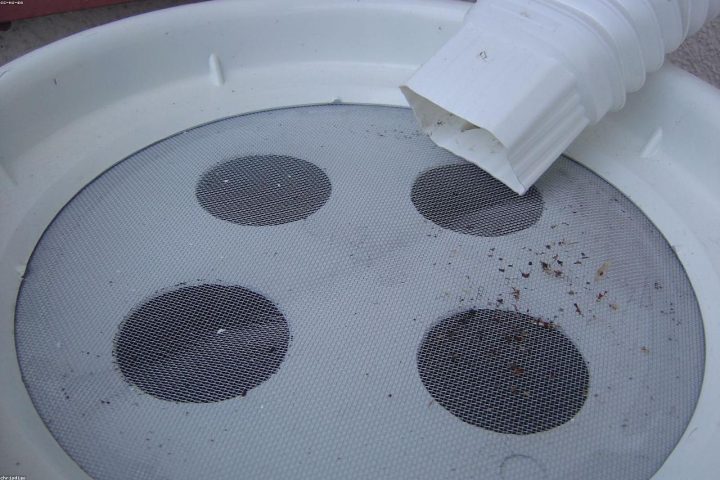
Washing machine output is more complicated but viable. A simple Y-valve at the discharge hose lets you redirect rinse water into a barrel or directly into a mulched garden bed via a holding tank with a screen. This kind of system handles real volume but requires a designed setup, which we discuss below.
What gray water is good for, and what it is not
Gray water excels at watering ornamental beds, fruit trees, shrubs, and the lawn during dry weeks. It is appropriate for established perennials, hedges, and trees with deep root systems that can buffer minor variations in soil chemistry.
Gray water is not appropriate for root vegetables, leafy greens that will be eaten raw, or any edible part of a plant that the water might directly contact. It is also a poor choice for acid-loving plants like blueberries (often slightly alkaline) and for the youngest seedlings, which can be sensitive to small amounts of soap residue.
- Good targets: fruit trees, ornamental shrubs, established perennials, lawn areas in drought
- Acceptable: tomatoes, peppers, squash, beans (delivered to the soil, not foliage)
- Avoid: lettuce, spinach, kale, root vegetables, herbs eaten raw, seedlings of any kind
- Never: any direct contact with edible foliage; storage beyond 24 hours
A simple weekly routine
If you want to start with gray water but do not want to install anything, here is a routine that adds up to meaningful water savings without complexity.
- Bucket in the shower while water heats: 5-15 gallons per week per person
- Pitcher at the kitchen sink for produce rinsing: 1-3 gallons per week
- Captured dishwater (from clean rinse only): 2-5 gallons per week
- Pet water bowl changes (the old water): 1-2 gallons per week
- House-plant excess from saucers (poured outside): 0.5-1 gallon per week
When a real diversion system makes sense
A formal gray water system with permitted plumbing makes sense in two situations: you live in a drought-prone region (much of California, the Southwest, parts of Texas), or you have a large fruit-tree orchard or extensive ornamental beds where regular volume actually matters. In both cases, a proper laundry-to-landscape system pays for itself within three years and adds modest property value.
If you are in a moderately rainy climate with a modest garden, a formal system is probably overkill. The bucket-and-pitcher routine handles the practical opportunity without permits, plumbing, or risk of code violations.
The mistakes worth avoiding
Three errors come up repeatedly with home gray water use. None are catastrophic, but each one undermines the project. Store gray water for more than twenty-four hours. Bacteria multiply quickly, and the water shifts from useful to genuinely smelly within a day or two. Use it on the same plants every week. The salt and surfactant load builds in the soil and eventually weakens plants. Rotate across different beds across the season. Pour it on dry, cracked clay. The first few uses will run straight through to subsoil. Wet the surface lightly first, then deliver the bulk of the gray water more slowly.
Gray water gardening is not a cure for a drought. It is a small, useful habit that turns a portion of household waste into a productive resource. Start with a bucket in the shower and a pitcher at the sink, and you will probably find the rest of the system follows naturally.
Reading your detergent label correctly
Most detergents are labeled as “safe for septic systems” or “biodegradable,” but those labels do not mean gray-water-safe for gardens. The terminology matters enough to be worth a careful read.
Detergents to avoid for garden gray water contain any of: sodium (high sodium content kills soil structure), borax or boron compounds (toxic to plants at low concentrations), brighteners and bluing agents (residues build up in soil), and most antibacterial compounds.
Detergents safe for gray water reuse are explicitly labeled for that purpose. Common gray-water-safe brands: Oasis (designed specifically for laundry-to-landscape systems), ECOS, Bio-Pac, and some Seventh Generation formulas (read each label; some contain boron). The cost is typically 20-40 percent higher than standard detergents.
If a formulation is unclear, a simple test works: pour a quarter cup of the detergent into a small dish of garden soil, mix to dampen, plant a bean seed. If the seed germinates and grows normally within ten days, the detergent is reasonably safe for your soil. If germination is poor or the seedling dies, switch detergents.
For households not committed to the full detergent switch, restrict gray water to ornamental beds with established perennials. Established plants tolerate small detergent residues better than seedlings and vegetables.
Related reading from the journal
For more along these lines, see How Much Water Does a Vegetable Garden Really Need?, The Mulch Layer That Cuts Your Watering in Half, and How to Set Up a Rain Barrel System for Beginners.
Further reading
Trusted references we consulted while researching this piece. All external.