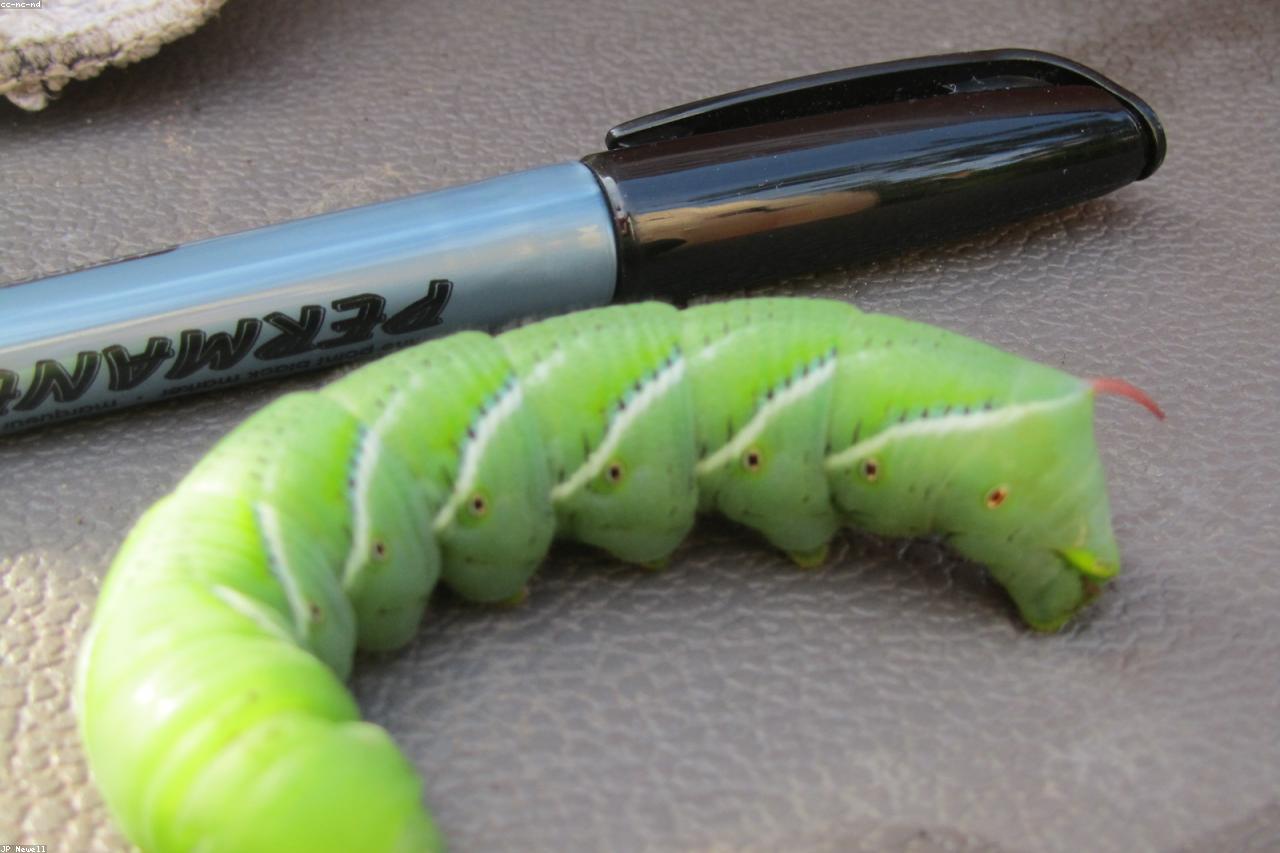
A tomato hornworm is impressive. They can grow to four inches long and as thick as your thumb. They eat voraciously, sometimes stripping a tomato plant of foliage in a single night. They are also camouflaged to look exactly like the stems they feed on; first-time gardeners often have no idea they have hornworms until the leaf damage is severe.
Pesticide-free hornworm management is straightforward once you know what to look for. The methods are simple, the results are reliable, and the entire pest cycle can be managed without harming any beneficial insects or wildlife.
What you are looking for
Tomato hornworms (Manduca quinquemaculata or Manduca sexta) are the caterpillar stage of large hawk moths. They are bright green with white diagonal stripes along their sides, ending in a curved black “horn” at the tail end (which is harmless; they do not sting).
Adult moths emerge in early summer and lay eggs (small green orbs, usually singly on the underside of tomato leaves). The caterpillars hatch and begin feeding immediately. They grow through five instars over 3-4 weeks, with damage rate increasing dramatically as they grow larger.
The visible signs of hornworms before you see the caterpillars themselves: dark green or black droppings (called frass) the size of small peas on leaves below the feeding caterpillar; missing or stripped leaves on otherwise healthy plants; broken stems where caterpillars have fed.
Method one: hand removal (the standard)
Hand removal is the most effective single hornworm management technique. The challenge is finding the camouflaged caterpillars among the tomato foliage.
Effective searching technique: look for frass on lower leaves first. Once you find frass, scan the leaves directly above (caterpillars feed and drop frass below themselves). The caterpillar is usually within a foot of the frass.
Inspect at the right time. Hornworms are most active and most visible at dawn and dusk; they often retreat to shaded parts of the plant during midday heat. Early morning inspection (before 9am) is when we have the most success finding them.
When you find one, pick it off (wear gloves if the texture bothers you) and drop into a bucket of soapy water. They die within minutes. Continue searching the plant; hornworms often come in clusters from a single egg batch.
Method two: support parasitic wasps
Braconid wasps are tiny parasitic wasps that lay eggs in tomato hornworms. The wasp larvae develop inside the caterpillar, eventually emerging through the skin as white rice-grain cocoons attached to the outside of the caterpillar. The caterpillar dies during this process.
If you find a hornworm with white cocoons attached, leave it in place. The caterpillar is dying and will not eat much more. The emerging wasps will reproduce and produce more parasitic wasps that find and kill more hornworms throughout the season.
To support braconid wasps generally: plant flowers with small accessible nectar (dill, fennel, parsley letting flower, alyssum, coriander letting flower). The adult wasps need nectar to support egg production.
A garden with established braconid wasp populations rarely has serious hornworm problems; the wasps find new hornworms within a few days and lay eggs in them before significant damage occurs.
Method three: Bt application
Bacillus thuringiensis (Bt) is a naturally occurring soil bacterium that specifically targets caterpillars. It is approved for organic production and has no effect on other insects, wildlife, pets, or humans.
Bt comes as a powder or liquid spray (Dipel, Thuricide, and others, $10-$20 per container). Apply to tomato foliage according to label directions. Caterpillars eat the treated leaves and stop feeding within hours. They die within 1-3 days.
Bt is highly effective but requires reapplication after rain (the bacteria wash off) and every 7-10 days during active hornworm season. The biological activity degrades in sunlight; apply in evening for best results.
This method is most useful for severe outbreaks where hand removal cannot keep up with hornworm populations. For modest issues, hand removal alone is usually sufficient.
Method four: trap moths early
The adult hawk moths (which lay the hornworm eggs) are large and active at dusk and dawn. Trapping or disrupting the adults reduces the next generation of hornworms.
UV blacklight traps (the same ones used for general moth control) catch adult hawk moths. Hang traps 50-100 feet from the tomato bed; the moths are drawn to the light and away from your plants.
This method works mostly as prevention. By the time you see hornworm caterpillars, the moths have already laid their eggs. Trap early in the season (June-July) for best results.
Method five: end-of-season cleanup
Hornworms pupate in the soil at the base of tomato plants in autumn. The pupae overwinter in the soil and emerge as moths the following spring.
Disrupting the pupation site reduces next year’s population. After tomato harvest is finished, lightly cultivate the soil around former tomato plants. Exposed pupae are vulnerable to predator insects, birds, and freeze damage.
This method reduces but does not eliminate next year’s hornworms (some pupae will still survive, and moths fly in from neighboring areas). It is a useful contribution to long-term population management.
A combined approach for tomato season
Our hornworm management follows this rough rhythm.
Spring planting time: plant dill, parsley, fennel, and other small-flowered plants near tomatoes. Support beneficial wasp populations.
Early summer (June-July): inspect tomato plants for hornworm eggs and small caterpillars weekly. Hand-remove early-stage caterpillars when found.
Peak season (July-August): inspect every 3-5 days. Hand-remove hornworms found. Apply Bt to plants showing severe damage if hand removal cannot keep up.
Late season (August-September): continue inspections; populations typically decline as adult moth activity slows.
Autumn cleanup: lightly cultivate the soil around former tomato plants to disrupt overwintering pupae.
Total time investment for the season: perhaps 3-5 hours of active hornworm management, with little to no damage to tomato production.
Tomato hornworms are dramatic but manageable without pesticides. Regular hand-picking handles most situations. Supporting parasitic wasps provides longer-term population control. Bt is the backup for severe outbreaks. The combined approach prevents significant damage to tomato production while keeping the garden free of broader pesticide impacts. Hornworms become an interesting part of the garden cycle rather than a crisis.
Related reading from the journal
Readers of this guide often turn next to Weed Barriers Compared: Newspaper, Cardboard, Wood Chips, Beneficial Insects to Encourage in Your Backyard, and Birds, Beetles, and the Garden Cleanup Crew.
Further reading
Trusted references we consulted while researching this piece. All external.